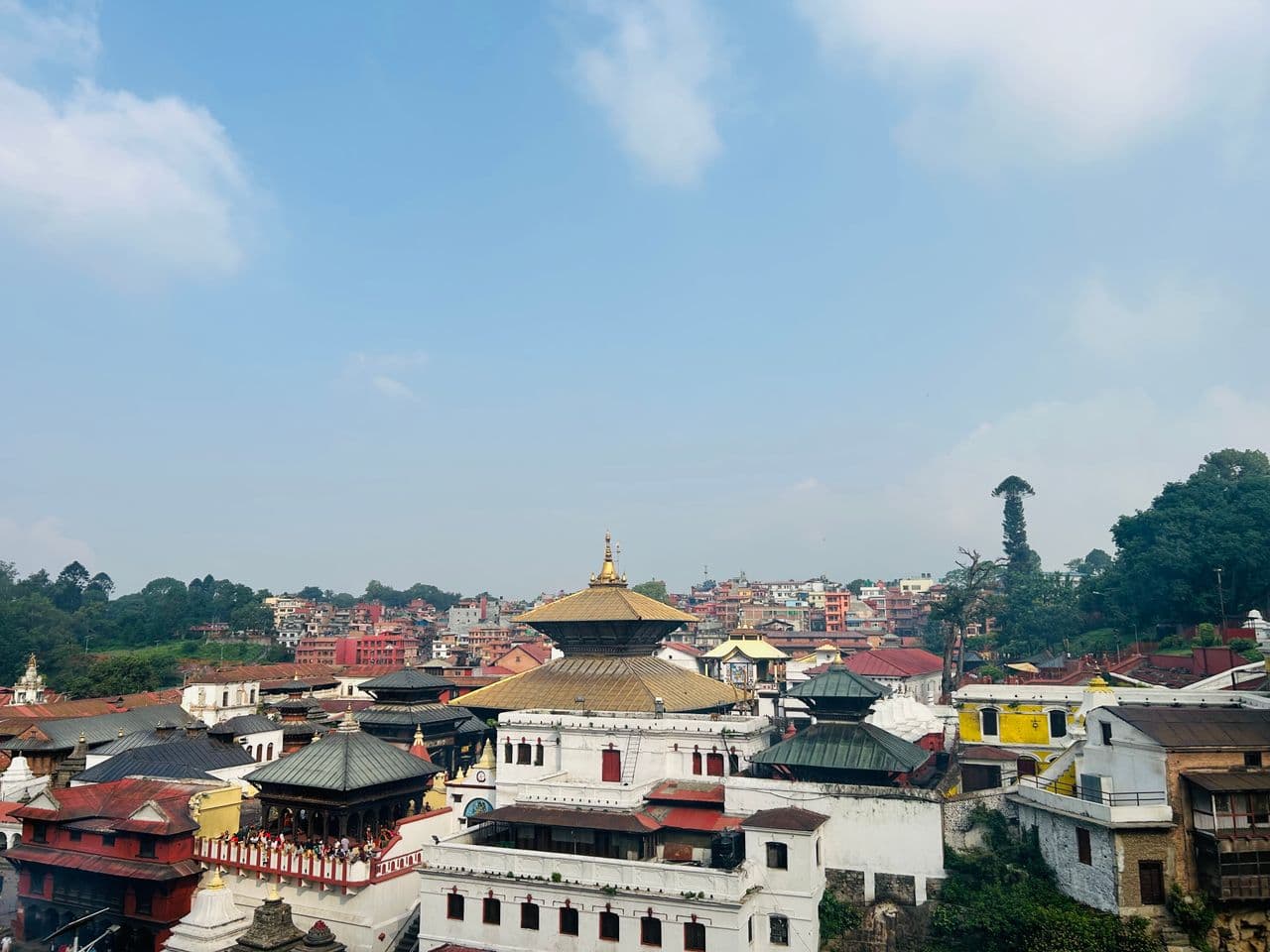
Pashupatinath Temple
1,400 m
KATHMANDU DISTRICT

Pashupatinath Temple

"श्री पशुपतिनाथ मन्दिर"

ELEVATION1,400 m4,593 ft
LOCATIONGaushala, KathmanduBanks of Bagmati River
BEST SEASONAutumn & SpringSep–Nov / Mar–May
TRADITIONSanatana DharmaShaivism

The Ultimate Spiritual Epicenter of Nepalese Hinduism

Pashupatinath Temple is a famous and sacred Hindu temple complex located on the banks of the Bagmati River in the eastern part of Kathmandu, Nepal. Dedicated to Lord Shiva in his incarnation as Pashupati (Lord of Animals), the temple serves as the head shrine of the Pashupat sect and is listed as a UNESCO World Heritage Site.

While the origins of the temple date back hundreds—if not thousands—of years, the current two-tiered pagoda-style structure was built in 1692 AD by King Bhupatindra Malla. The complex stretches across both banks of the sacred Bagmati River, teeming with sadhus, temples, ashrams, and historic cremation ghats.

Key Highlights

  • Magnificent two-tiered Nepalese pagoda style structure featuring copper roofs covered with pure gold leaf and intricate wood carvings.
  • The sacred four-faced (Chaturmukhi) main lingam representing the multi-faceted aspects of Lord Shiva.
  • Hosts hundreds of thousands of pilgrims and ascetic sadhus from across India and Nepal during Maha Shivaratri.
  • The holy Bagmati River running through the complex, playing a vital role in Hindu death rituals and cremation ghats (Aryaghat).
  • Surrounded by hundreds of smaller shrines, Shiva lingams, and residence halls for holy men.

Quick Facts

FOUNDED / ORIGINAncient Origins (Main pagoda rebuilt 1692 AD)
MAIN FESTIVALMaha Shivaratri (Feb/Mar)
LINEAGEPashupat Sampradaya / Mukhya Shaiva
COORDINATES27.7105° N, 85.3487° E
Beyond the Basics

Pashupatinath Temple: Worship, Architecture & Festival Guide

The deity and daily ritual of Pashupatinath Temple, its building tradition, its main festival, and the etiquette expected of visitors.

Ancient Roots & Architectural Legacy

According to local chronicles like the Nepal Mahatmya and Himavatkhanda, the divine presence of Pashupatinath arose when Lord Shiva and Goddess Parvati wandered to the Kathmandu Valley and rested by the Bagmati River in the form of antelopes.

Historical records trace the temple's prominence back to the Lichhavi period in the 5th century. Over successive centuries, reigning monarchs from the Malla and Shah dynasties continuously renovated, expanded, and endowed the sprawling complex with gold and wealth.

Maha Shivaratri: Night of Lord Shiva

Maha Shivaratri is the premier festival celebrated at Pashupatinath, drawing over a million devotees on a single day in late winter (February or March).

During this festival, ascetics (sadhus) from various parts of South Asia gather on the temple grounds, and continuous devotional chanting, prayers, and overnight vigil fires illuminate the entire temple area.

Etiquette & Visitor Guidelines

Only practicing Hindus of South Asian descent are permitted to enter the inner courtyard surrounding the main pagoda temple.

Non-Hindu visitors and international tourists can enjoy spectacular panoramic views of the temple courtyard and complex from the eastern banks across the Bagmati River.

Always dress modestly, respect local sadhus and pilgrims, and refrain from photography inside restricted sacred zones.

Pashupatinath Temple: Deity, Architecture and Setting

Pashupatinath Temple is dedicated to Lord Shiva (Pashupati) and stands at about 1,400 m in Gaushala, Kathmandu, KATHMANDU DISTRICT. The shrine follows the Sanatana Dharma tradition and is built in the Double-roofed Nepalese Pagoda style, with details characteristic of the Shaivism school.

The temple sits beside Banks of Bagmati River, which has shaped both its ritual life and the way pilgrims approach it. Worship is led by Pashupat Sampradaya / Mukhya Shaiva, and the daily routine of prayers and offerings continues alongside visitor traffic.

  • Coordinates: 27.7105° N, 85.3487° E.
  • Founded / rebuilt: Ancient Origins (Main pagoda rebuilt 1692 AD).
  • Main festival: Maha Shivaratri (Feb/Mar).

Pashupatinath Temple: When to Visit

The most comfortable months to visit Pashupatinath Temple are Autumn & Spring (Sep–Nov / Mar–May), when temperatures are moderate and access is reliable. The main festival, Maha Shivaratri (Feb/Mar), is spectacular but crowded, so arrive early if you want space to observe the rituals.

Outside festival periods, early morning and late afternoon are the calmest times at Pashupatinath Temple. Dress modestly, remove shoes before entering the shrine, and check whether photography is allowed near the Lord Shiva (Pashupati) image.