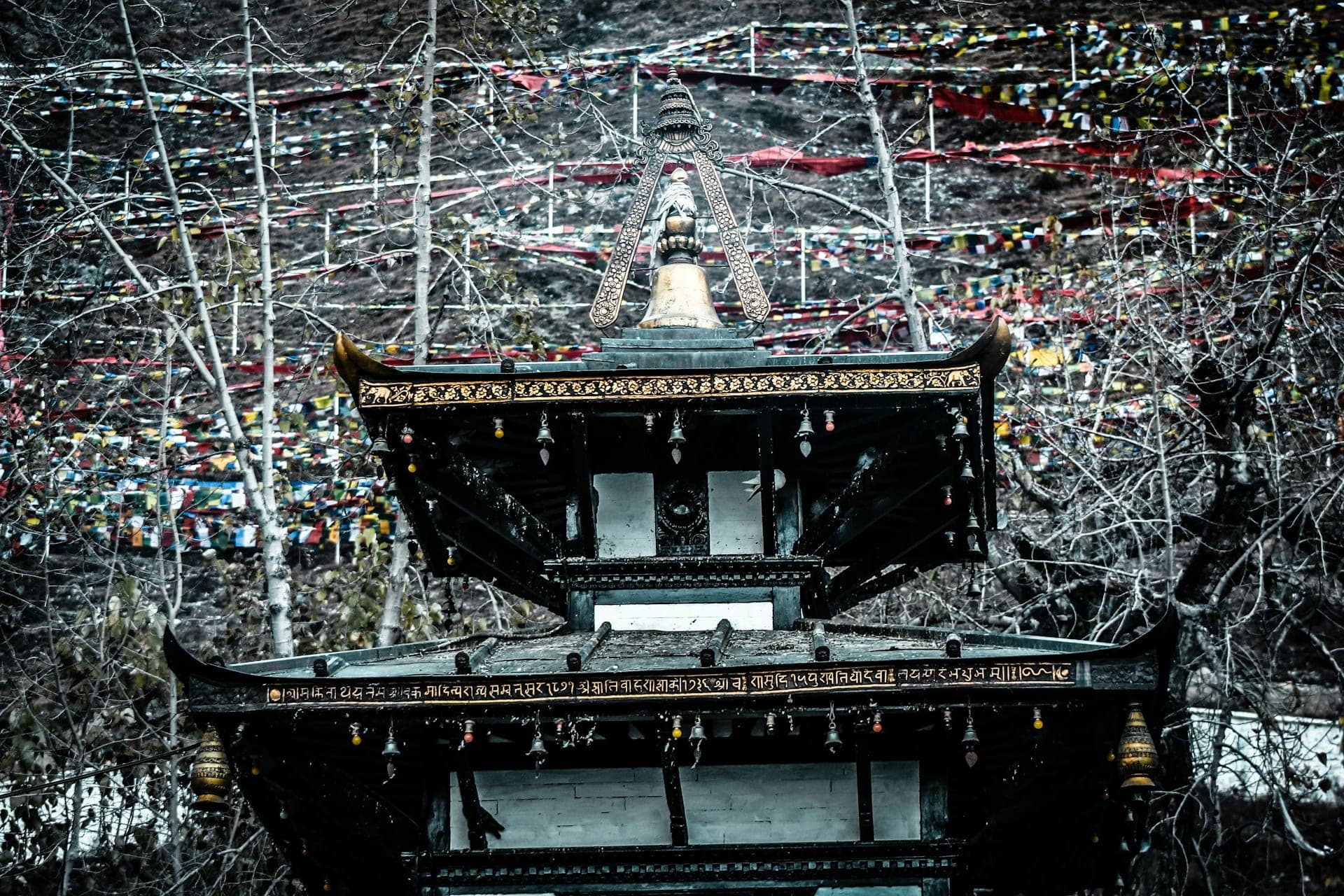
Muktinath Temple
3,710 m
MUSTANG DISTRICT

Muktinath Temple

"श्री मुक्तिनाथ धाम"

ELEVATION3,710 m12,172 ft
LOCATIONMuktinath Valley, MustangThorong La Foothills
BEST SEASONSpring & AutumnMar–May / Sep–Nov
TRADITIONSanatana Dharma & VajrayanaVaishnavism & Tibetan Buddhism

The Sacred Abode of Liberation (Moksha)

Muktinath is a sacred shrine situated at the foot of the Thorong La mountain pass in Mustang, Nepal. Revered by Hindus as Mukti Kshetra (the place of liberation) and by Buddhists as Chumig Gyatsa (Hundred Waters), it is one of the highest holy temples in the world.

The main pagoda-style shrine houses a golden statue of Lord Vishnu as Muktinath. The surrounding courtyard features 108 bull-headed water spouts flowing with icy mountain spring water, alongside an eternal natural gas flame (Jwala Mai) burning from a rock crevice.

Key Highlights

  • Breathtaking high-altitude Himalayan setting in the arid rain-shadow region of Upper Mustang.
  • The ritual of bathing under all 108 water spouts for spiritual purification and liberation.
  • The miraculous Jwala Mai temple where natural subterranean gas feeds an eternal holy flame.
  • The search for sacred fossilized ammonite stones (Shaligrams) along the nearby Kaligandaki River bed.

Quick Facts

FOUNDED / ORIGINAncient (Renovated in modern era)
MAIN FESTIVALJanai Purnima (August)
LINEAGEShaligram / Vaishnava Tradition
COORDINATES28.8167° N, 83.8667° E
Beyond the Basics

Muktinath Temple: Worship, Architecture & Festival Guide

The deity and daily ritual of Muktinath Temple, its building tradition, its main festival, and the etiquette expected of visitors.

A Convergence of Two Great Faiths

Muktinath has been documented as a major pilgrimage site for centuries, mentioned in ancient Puranas as one of the eight sacred shrines (Swayam Vyakta Kshetras) of Lord Vishnu.

For Tibetan Buddhists, the site is closely linked to Guru Rinpoche (Padmasambhava) and represents a powerful seat of dakinis and elements where spiritual transformation is attained.

Janai Purnima & Special Pilgrimages

Thousands of pilgrims trek or ride to Muktinath during Janai Purnima in August to perform sacred rituals, change holy threads, and offer prayers.

Devotees visit year-round to seek moksha (liberation from the cycle of rebirth) and pay homage to ancestral spirits.

Etiquette & Visitor Guidelines

Acclimatize properly to high altitude conditions (3,710m) before engaging in extensive temple rituals.

Maintain respectful silence near the shrine and adhere to local environmental preservation rules in fragile Mustang ecosystems.

Leather items are generally prohibited inside certain sacred inner sanctum enclosures.

Muktinath Temple: Deity, Architecture and Setting

Muktinath Temple is dedicated to Lord Vishnu (Muktinath) / Avalokiteshvara and stands at about 3,710 m in Muktinath Valley, Mustang, MUSTANG DISTRICT. The shrine follows the Sanatana Dharma & Vajrayana tradition and is built in the Pagoda Style style, with details characteristic of the Vaishnavism & Tibetan Buddhism school.

The temple sits beside Thorong La Foothills, which has shaped both its ritual life and the way pilgrims approach it. Worship is led by Shaligram / Vaishnava Tradition, and the daily routine of prayers and offerings continues alongside visitor traffic.

  • Coordinates: 28.8167° N, 83.8667° E.
  • Founded / rebuilt: Ancient (Renovated in modern era).
  • Main festival: Janai Purnima (August).

Muktinath Temple: When to Visit

The most comfortable months to visit Muktinath Temple are Spring & Autumn (Mar–May / Sep–Nov), when temperatures are moderate and access is reliable. The main festival, Janai Purnima (August), is spectacular but crowded, so arrive early if you want space to observe the rituals.

Outside festival periods, early morning and late afternoon are the calmest times at Muktinath Temple. Dress modestly, remove shoes before entering the shrine, and check whether photography is allowed near the Lord Vishnu (Muktinath) / Avalokiteshvara image.