Janaki Mandir
74 m
DHANUSHA DISTRICT

Janaki Mandir

"श्री राम जानकी मन्दिर"

ELEVATION74 m243 ft
LOCATIONJanakpurdham, DhanushaMithila Region
BEST SEASONAutumn to SpringOct–Mar
TRADITIONSanatana DharmaVaishnavism / Ram bhakti

The Jewel of Mithila Architecture

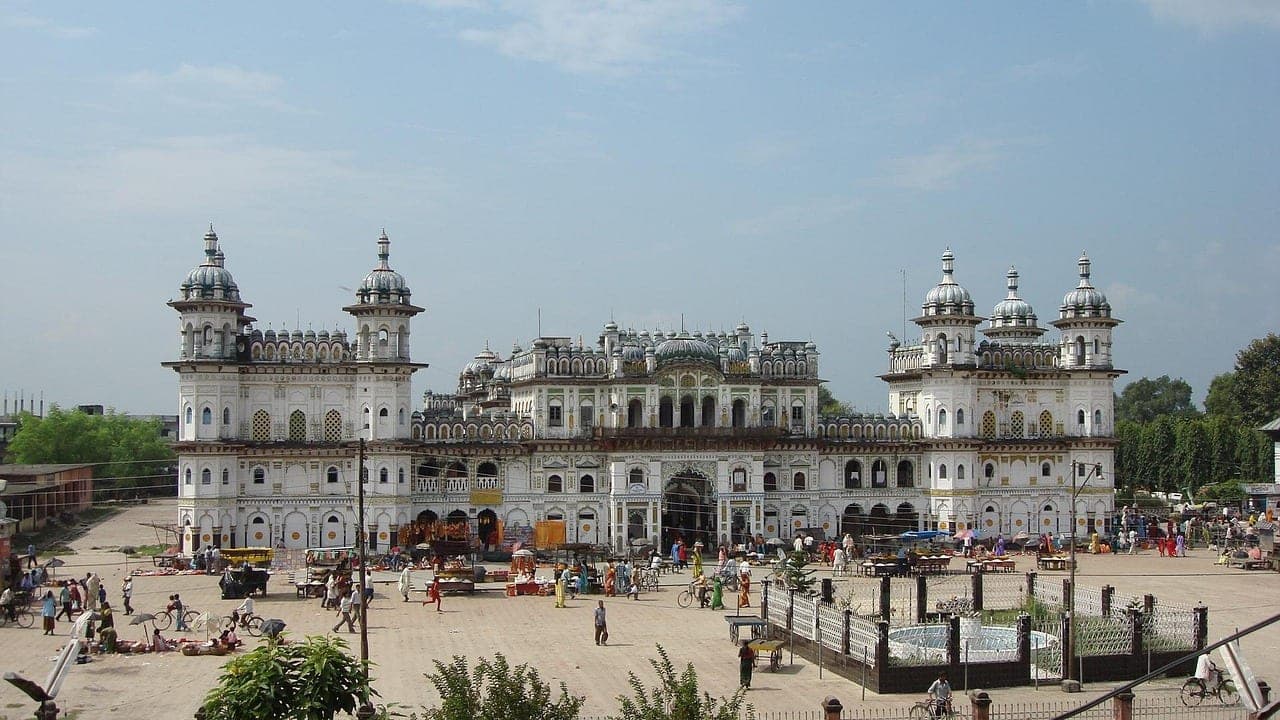
Janaki Mandir is a Hindu temple dedicated to Goddess Sita, located in the heart of Janakpur, Nepal. Often referred to as the Nau Lakha Mandir (costing nine lakhs of rupees to build), it is one of the grandest examples of modern Rajput and Mughal architectural fusion in South Asia.

Built entirely of stone and marble with fully carved domes, turrets, and pillared corridors, the temple marks the sacred site where Goddess Sita was born and where her divine wedding to Lord Rama took place according to the Ramayana epic.

Key Highlights

  • Stunning white marble structure featuring intricate lattice screens (jalis), domes, and vibrant stained glass windows.
  • Located in the historical capital of the ancient Mithila Kingdom, steeped in rich Maithili art and culture.
  • Hosts the grand annual Vivah Panchami festival recreating the divine wedding ceremony of Ram and Sita.
  • Surrounded by numerous sacred ponds (sars) like Sagar, Ganga Sagar, and Argja where pilgrims take holy dips.

Quick Facts

FOUNDED / ORIGIN1910 AD (Queen Vrisha Bhanu Kumari of Tikamgarh)
MAIN FESTIVALVivah Panchami (Nov/Dec)
LINEAGERamanandi Sampradaya
COORDINATES26.7288° N, 85.9264° E
Beyond the Basics

Janaki Mandir: Worship, Architecture & Festival Guide

The deity and daily ritual of Janaki Mandir, its building tradition, its main festival, and the etiquette expected of visitors.

A Monument of Devotion in Mithila

The site of Janakpur holds deep antiquity as the capital of King Janaka. The present-day temple structure was commissioned in 1910 by Queen Vrisha Bhanu Kumari of Tikamgarh (India) after a golden statue of Goddess Sita was discovered at the exact location.

It stands today as a central pilgrimage destination uniting millions of devotees from Nepal and India who celebrate the eternal bond of Rama and Sita.

Vivah Panchami: The Divine Wedding

Vivah Panchami celebrates the marriage anniversary of Lord Rama and Goddess Sita in November or December.

A grand ceremonial wedding procession (Barat) is staged with thousands of pilgrims traveling from Ayodhya (India) to Janakpur to partake in the week-long festivities, folk music, and theatrical performances.

Etiquette & Visitor Guidelines

Dress respectfully covering shoulders and knees out of reverence for the sacred shrine.

Remove footwear before stepping onto the temple marble floors and prayer areas.

Photography is permitted in outer courtyards but restricted inside sanctum sanctorum rooms.

Janaki Mandir: Deity, Architecture and Setting

Janaki Mandir is dedicated to Goddess Sita & Lord Rama and stands at about 74 m in Janakpurdham, Dhanusha, DHANUSHA DISTRICT. The shrine follows the Sanatana Dharma tradition and is built in the Mughal-Rajput Style style, with details characteristic of the Vaishnavism / Ram bhakti school.

The temple sits beside Mithila Region, which has shaped both its ritual life and the way pilgrims approach it. Worship is led by Ramanandi Sampradaya, and the daily routine of prayers and offerings continues alongside visitor traffic.

  • Coordinates: 26.7288° N, 85.9264° E.
  • Founded / rebuilt: 1910 AD (Queen Vrisha Bhanu Kumari of Tikamgarh).
  • Main festival: Vivah Panchami (Nov/Dec).

Janaki Mandir: When to Visit

The most comfortable months to visit Janaki Mandir are Autumn to Spring (Oct–Mar), when temperatures are moderate and access is reliable. The main festival, Vivah Panchami (Nov/Dec), is spectacular but crowded, so arrive early if you want space to observe the rituals.

Outside festival periods, early morning and late afternoon are the calmest times at Janaki Mandir. Dress modestly, remove shoes before entering the shrine, and check whether photography is allowed near the Goddess Sita & Lord Rama image.