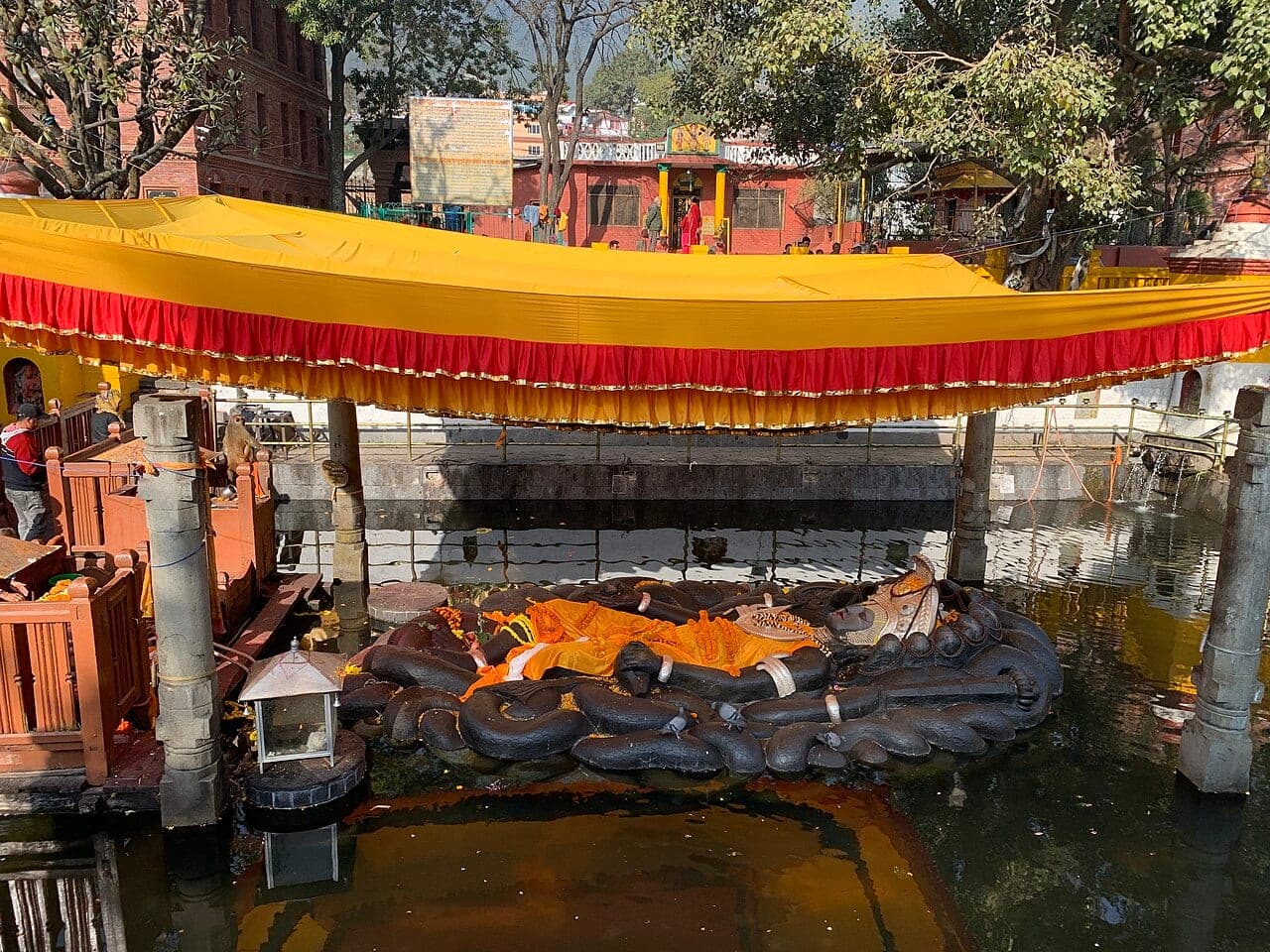
Budhanilkantha Temple
1,440 m
KATHMANDU DISTRICT

Budhanilkantha Temple

"बुढानिलकण्ठ मन्दिर"

ELEVATION1,440 m4,724 ft
LOCATIONBudhanilkantha, KathmanduBase of Shivapuri Hill
BEST SEASONAll Year RoundJan–Dec
TRADITIONSanatana DharmaVaishnavism

The Floating Sleeping Vishnu of Shivapuri

Budhanilkantha Temple is an open-air Hindu shrine dedicated to Lord Vishnu, located at the foot of the Shivapuri hills in the northern outskirts of Kathmandu. It features the largest and most famous stone carving in Nepal: a 5-meter-long monolith depicting Lord Vishnu reclining on the coils of the cosmic serpent Sheshnag.

Carved from a single block of black basalt stone of unknown geological origin, the colossal statue rests in a recessed rectangular water tank, giving the illusion that the heavy deity is floating on water.

Key Highlights

  • A magnificent 5th-century monolithic masterpiece carved with incredible precision.
  • The optical illusion of the massive basalt statue floating peacefully in a sacred pool.
  • Quiet sanctuary setting at the base of the forested Shivapuri National Park ridge.
  • Grand celebrations during Haribodhini Ekadashi when thousands gather for overnight prayers.

Quick Facts

FOUNDED / ORIGIN5th Century AD (Lichhavi Period)
MAIN FESTIVALHaribodhini Ekadashi (Nov)
LINEAGEVaishnava Tradition
COORDINATES27.7811° N, 85.3672° E
Beyond the Basics

Budhanilkantha Temple: Worship, Architecture & Festival Guide

The deity and daily ritual of Budhanilkantha Temple, its building tradition, its main festival, and the etiquette expected of visitors.

Ancient Sculptural Mystery

According to legend, the statue was sculpted during the Lichhavi period in the 5th century by a farmer who accidentally struck the buried stone while tilling his field, causing blood to flow from the earth.

Historical folklore holds that reigning Nepalese monarchs are forbidden from visiting Budhanilkantha due to an ancient curse warning of misfortune, keeping royal visits restricted.

Haribodhini Ekadashi: Awakening of Vishnu

Haribodhini Ekadashi in November marks the awakening of Lord Vishnu from his four-month cosmic slumber, drawing massive crowds of devotees who offer flowers, sugarcane, and prayers at the water's edge.

Etiquette & Visitor Guidelines

Visitors must view the statue from the surrounding stone perimeter railing as direct entry into the water pool is restricted.

Keep photography respectful and avoid stepping onto sacred offering platforms.

Budhanilkantha Temple: Deity, Architecture and Setting

Budhanilkantha Temple is dedicated to Lord Vishnu (Jalashayana) and stands at about 1,440 m in Budhanilkantha, Kathmandu, KATHMANDU DISTRICT. The shrine follows the Sanatana Dharma tradition and is built in the Open-air Sacred Pool Sanctuary style, with details characteristic of the Vaishnavism school.

The temple sits beside Base of Shivapuri Hill, which has shaped both its ritual life and the way pilgrims approach it. Worship is led by Vaishnava Tradition, and the daily routine of prayers and offerings continues alongside visitor traffic.

  • Coordinates: 27.7811° N, 85.3672° E.
  • Founded / rebuilt: 5th Century AD (Lichhavi Period).
  • Main festival: Haribodhini Ekadashi (Nov).

Budhanilkantha Temple: When to Visit

The most comfortable months to visit Budhanilkantha Temple are All Year Round (Jan–Dec), when temperatures are moderate and access is reliable. The main festival, Haribodhini Ekadashi (Nov), is spectacular but crowded, so arrive early if you want space to observe the rituals.

Outside festival periods, early morning and late afternoon are the calmest times at Budhanilkantha Temple. Dress modestly, remove shoes before entering the shrine, and check whether photography is allowed near the Lord Vishnu (Jalashayana) image.