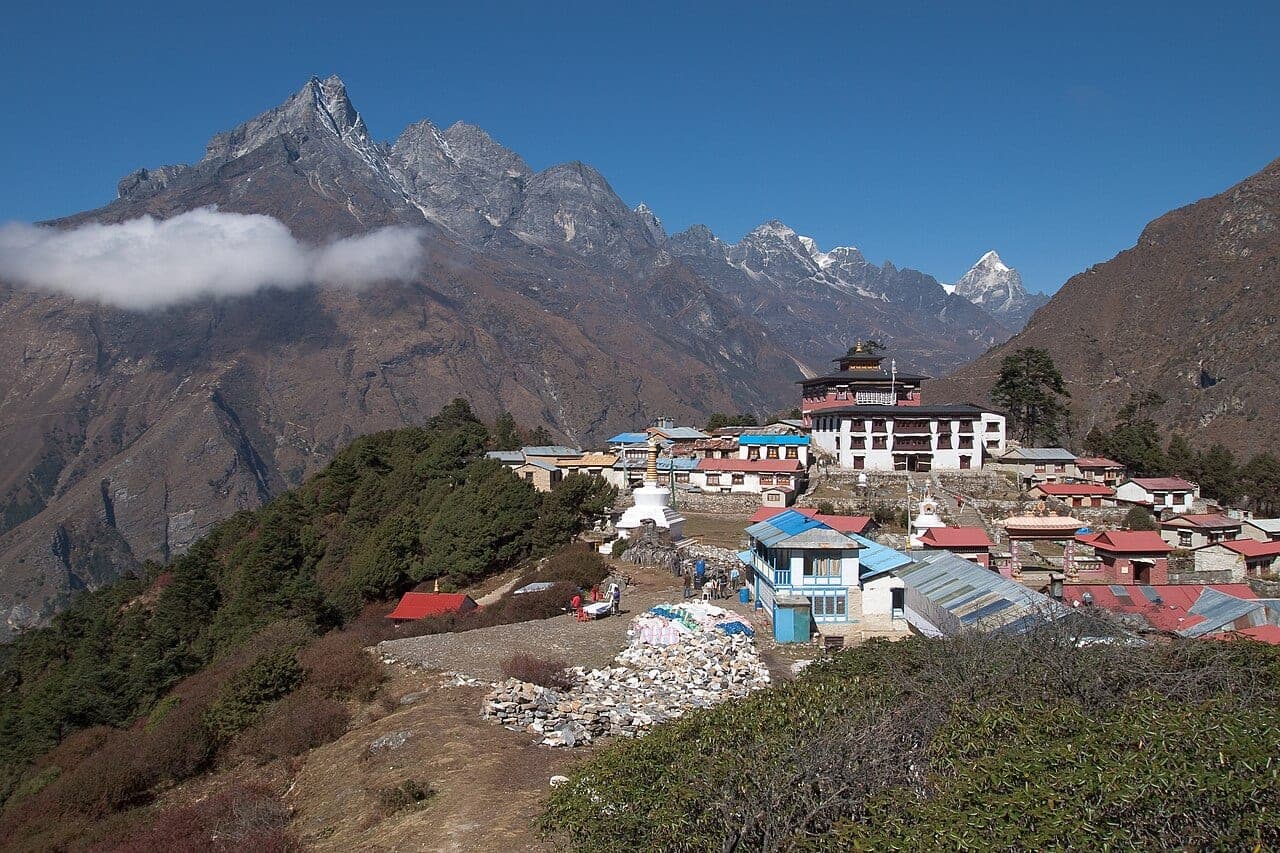
Tengboche Monastery
3,867 m
SOLUKHUMBU DISTRICT

Tengboche Monastery

"Dawa Choling Gompa"

ELEVATION3,867 m12,687 ft
LOCATIONTengboche, KhumbuSagarmatha National Park
BEST SEASONSpring & AutumnMar–May / Sep–Nov
TRADITIONNyingma TibetanDrukpa & Vajrayana

The Spiritual Heart of the Khumbu Region

Tengboche Monastery (or Thyangboche) is a famous Tibetan Buddhist monastery of the Sherpa community located in Tengboche village in Khumbu, Eastern Nepal. Positioned at 3,867 meters, the monastery sits on a high hill at the confluence of the Dudh Kosi and Imja Khola rivers, with a commanding view of the Himalayan range including Ama Dablam, Everest, Lhotse, and Nuptse.

Established in 1916 by Lama Gulu with links to the Mother Monastery Mindrolling in Tibet, Tengboche is the leading Buddhist cultural center in the Khumbu region. It plays a pivotal role in blessing mountaineering expeditions heading to Everest and serves as a peaceful sanctuary for monks and pilgrims alike.

Key Highlights

  • Founded in 1916 by Lama Gulu, affiliated with the revered Mindrolling Monastery in Tibet.
  • Panoramic world-class backdrop featuring Ama Dablam, Mt. Everest, Lhotse, and Thamserku.
  • Hosts the vibrant 19-day Mani Rimdu Festival every autumn (Oct/Nov) with sacred mask dances.
  • Traditional spiritual checkpoint where Everest climbers receive blessings for safe passage.
  • Exquisite Tibetan wall paintings, intricate thangkas, and a majestic 20-foot Buddha statue.

Quick Facts

FOUNDED / ORIGIN1916 AD (Lama Gulu)
MAIN FESTIVALMani Rimdu (Autumn Full Moon)
LINEAGENyingma Sect of Tibetan Buddhism
COORDINATES27.8358° N, 86.7640° E
Beyond the Basics

Tengboche Monastery: Practice, Festival & Visitor Guide

The lineage and daily practice of Tengboche Monastery, its festival calendar, and how to visit a working monastery respectfully.

Centuries of Resilience & Sacred Heritage

The site of Tengboche was blessed as a sacred ground as early as the 17th century by Sangwa Dorje, who predicted that a monastery would eventually be built here. His footprint is still believed to be preserved in a stone near the monastery courtyard.

The main gompa was tragically destroyed twice in history—first by a devastating earthquake in 1934, and later by an electrical fire in 1989. Both times, it was meticulously rebuilt through local Sherpa devotion, international support, and leadership.

Mani Rimdu: The Sacred Masked Dance

Mani Rimdu is the major 19-day festival celebrated at Tengboche during the tenth lunar month of the Tibetan calendar (usually October or November).

It consists of colorful sand mandala creation, sacred empowerments, and public performance of "Cham" (masked ritual dances by monks representing the victory of Buddhism over ancient chaotic forces).

Etiquette & Visitor Guidelines

Dress modestly and remove shoes, hats, and sunglasses before entering the main prayer hall.

Always walk clockwise around the monastery, stupas, and prayer wheels.

Maintain silence during morning and afternoon prayer sessions.

Tengboche Monastery: Lineage and Setting

Tengboche Monastery belongs to the Nyingma Tibetan tradition, specifically the Drukpa & Vajrayana lineage, and stands at 3,867 m in Tengboche, Khumbu, SOLUKHUMBU DISTRICT. The surrounding area forms part of Sagarmatha National Park.

The monastery follows Nyingma Sect of Tibetan Buddhism and traces its foundation to 1916 AD (Lama Gulu). Monks live and study on site, so the prayer hall, courtyards, and surrounding buildings are working religious spaces rather than monuments.

  • Coordinates: 27.8358° N, 86.7640° E.
  • Main festival: Mani Rimdu (Autumn Full Moon).
  • Best season: Spring & Autumn (Mar–May / Sep–Nov).

Tengboche Monastery: Planning a Respectful Visit

The best months to visit Tengboche Monastery are Spring & Autumn (Mar–May / Sep–Nov). Mornings are usually the calmest time to sit in the prayer hall, while afternoons suit walking in the surrounding area of SOLUKHUMBU DISTRICT.

At Tengboche Monastery, dress modestly, remove shoes and hats before entering the main hall, and keep phones silent during prayers. Some monasteries in SOLUKHUMBU DISTRICT welcome overnight guests, which supports the community and gives time to join an evening session.