Artistic Renaissance under King Siddhinarsingh Malla
King Siddhinarsingh Malla transformed Patan into a flourishing intellectual and architectural capital in the 17th century, constructing the famous stone temples that define the skyline today.
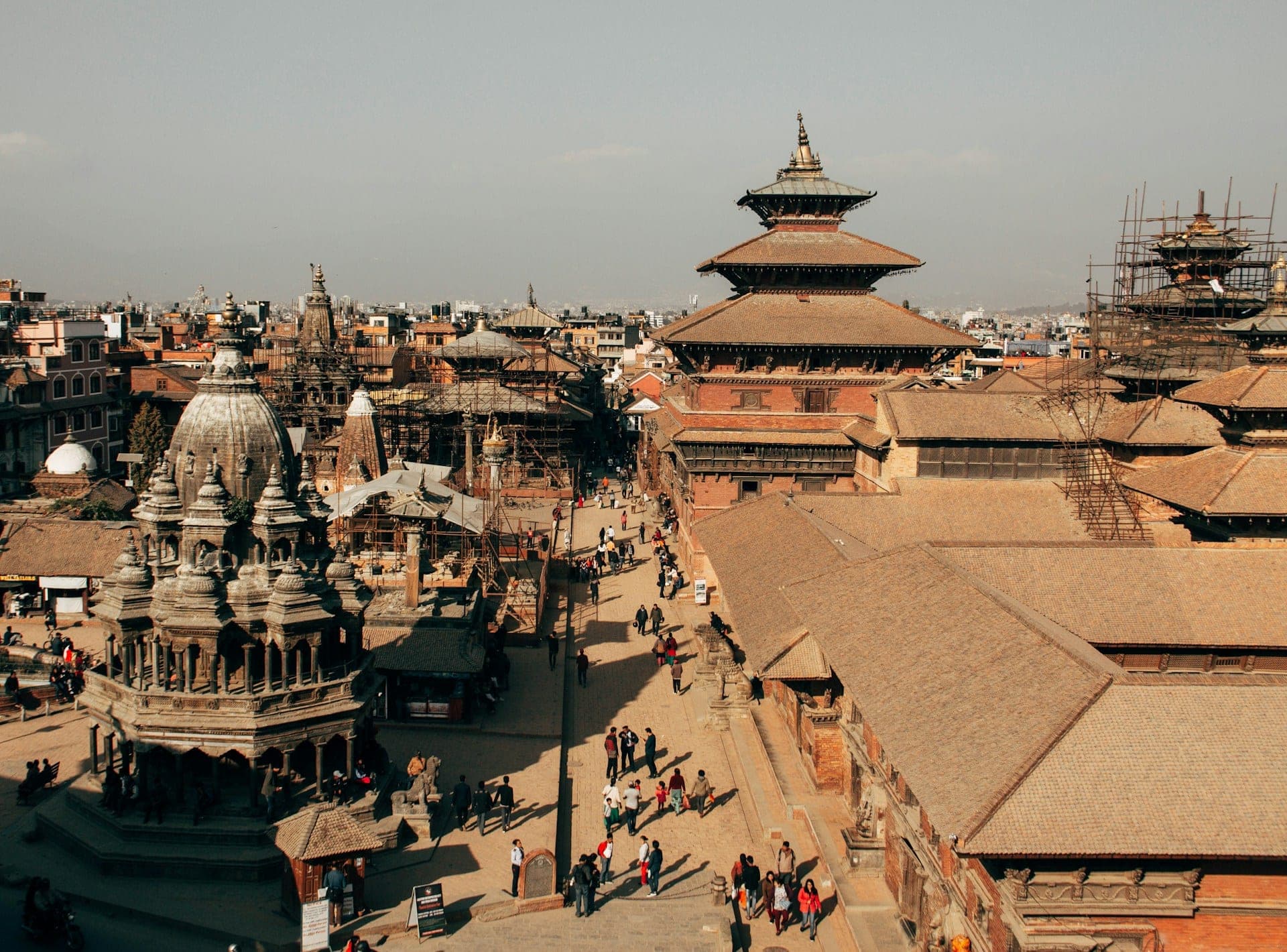
"Yala Layaku"
Patan Durbar Square is situated in the center of the city of Lalitpur (meaning City of Fine Arts). The square is an enchanting display of Newar craftsmanship, featuring courtyard palace wings (Chowks), intricately carved wooden struts, and stone monuments.
Highlights include the multi-tiered octagonal Krishna Mandir built entirely of carved stone, the Golden Temple (Hiranya Varna Mahavihar), and the Patan Museum—widely regarded as one of South Asia’s finest bronze art galleries.
How Patan Durbar Square was built and used over time, what happens there during festivals, and what to know before you arrive.
King Siddhinarsingh Malla transformed Patan into a flourishing intellectual and architectural capital in the 17th century, constructing the famous stone temples that define the skyline today.
Nepal’s longest chariot festival, where a giant 60-foot tall wooden chariot of the deity of rain is pulled through Patan over the course of several weeks.
Entry passes are required for non-Nepali citizens at the city gates.
Photography inside certain private shrines in the Golden Temple is restricted.
Patan Durbar Square (Yala Layaku) lies at 1,350 m in Patan, Lalitpur, LALITPUR DISTRICT, within the Kathmandu Valley region. Its setting is described as City of Fine Arts, and the monument is associated with 3rd Century BC (Ashoka Era Roots).
Most travellers reach Patan Durbar Square from the nearest town in LALITPUR DISTRICT by road, then explore on foot. The recommended window is Year-Round (Oct–April); early morning is quieter and cooler, while late afternoon offers softer light for the carved facades.
The monument represents Malla Architecture & Metalworking, within the Newar Fine Arts Center tradition. Brick, timber, stone, and metal are worked together in a way that has survived earthquakes and centuries of use, and restoration at Patan Durbar Square continues to rely on local craftspeople.
Patan Durbar Square is still a working religious and community space rather than a ruin. Offerings, repairs, festivals, and everyday traffic all take place among its historic structures, so visitors should expect the site to be busy with local life as well as tourism.