Pashupatinath Temple
1,350 m
KATHMANDU DISTRICT

Pashupatinath Temple

"Pashupati Kshetra"

ELEVATION1,350 m4,429 ft
LOCATIONGaushala, KathmanduBagmati River Banks
BEST SEASONYear-RoundBest Oct–March
ARCHITECTUREClassical Hindu Temple ArchitectureShaivism Sacred Sanctuary

The Sacred Abode of Lord Shiva in Nepal

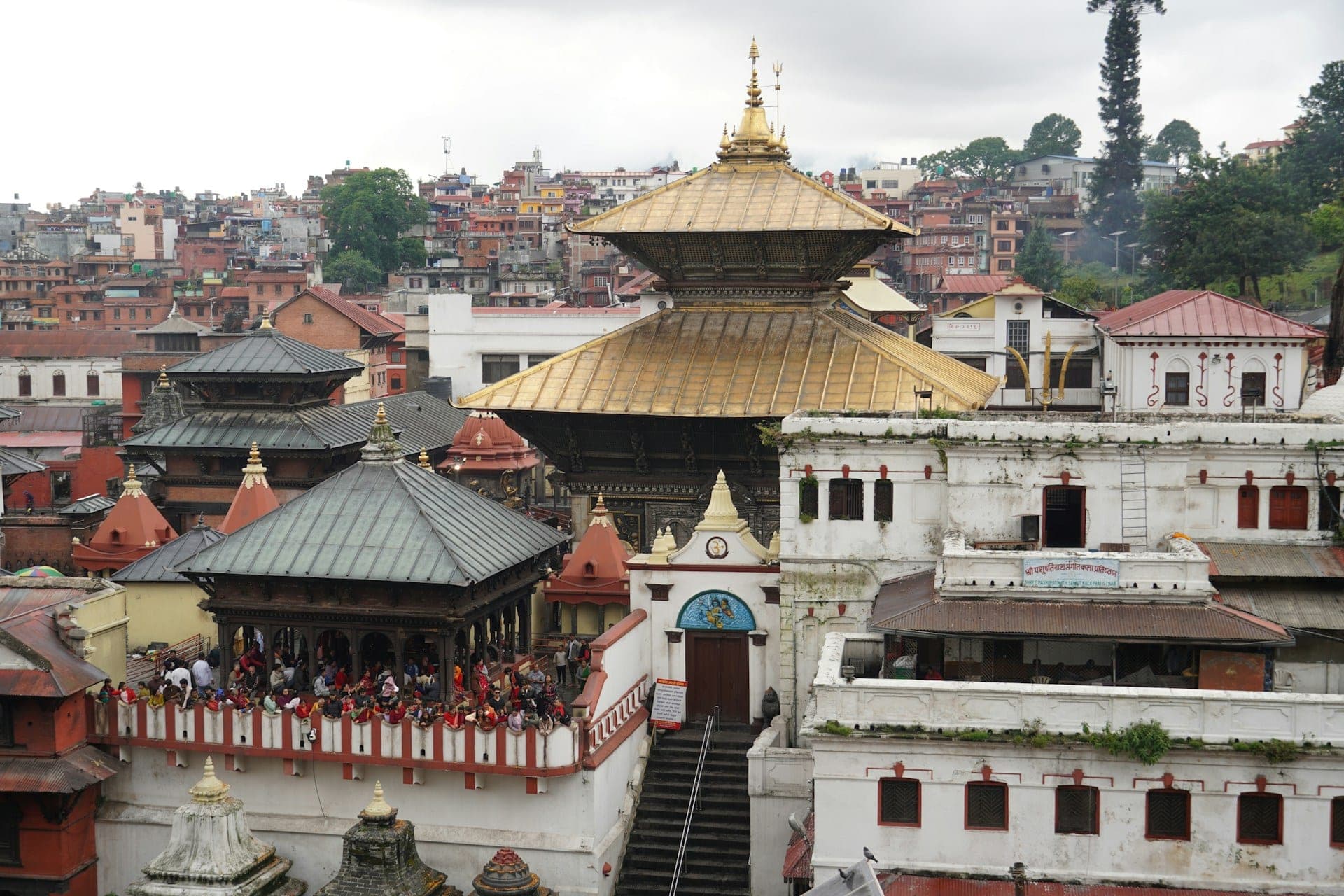
Pashupatinath Temple is one of the most sacred Hindu temples dedicated to Lord Shiva in the world. Situated on the banks of the Bagmati River, this ancient complex encompasses over 500 temples, shrines, ashrams, and stone monuments.

Featuring a golden-gilded roof, silver-embossed doors, and four-faced Shiva Lingam, Pashupatinath serves as the spiritual heart of sacred rituals, daily open-air cremations (Aryaghat), and evening Bagmati Arati ceremonies.

Key Highlights

  • UNESCO World Heritage site and the seat of Nepal's national deity Lord Pashupatinath.
  • Two-tiered pagoda with a solid gold pinnacle and silver-plated doors.
  • Open-air riverbank ghats reflecting classical Hindu funeral and life rites.
  • Home to hundreds of Sadhus (ascetics) and pilgrims from across South Asia.
  • Vibrant daily evening Bagmati Ganga Arati with music and oil lamps.

Quick Facts

FOUNDED / ORIGIN5th Century AD (Lichhavi Era)
MAIN FESTIVALMaha Shivaratri & Teej
LINEAGE & ERAVedic Shaiva Lineage
COORDINATES27.7104° N, 85.3487° E
Beyond the Basics

Pashupatinath Temple: History, Rituals & Visitor Guide

How Pashupatinath Temple was built and used over time, what happens there during festivals, and what to know before you arrive.

Centuries of Royal Devotion & Myths

Though the current pagoda structure was reconstructed in 1696 by King Bhupalendra Malla after termite damage, historical records document worship at Pashupatinath dating back past 400 AD during the Lichhavi period.

Maha Shivaratri

On the night of Shivaratri, over 1 million Hindu pilgrims, ascetics, and sadhus gather from around the world to offer prayers, butter lamps, and sacred chants.

Temple Regulations

The inner main temple complex is strictly reserved for Hindu devotees.

Non-Hindu visitors are welcome across the Bagmati River vantage points and outer courtyard grounds.

Pashupatinath Temple: Setting, Access and Timing

Pashupatinath Temple (Pashupati Kshetra) lies at 1,350 m in Gaushala, Kathmandu, KATHMANDU DISTRICT, within the Kathmandu Valley region. Its setting is described as Bagmati River Banks, and the monument is associated with 5th Century AD (Lichhavi Era).

Most travellers reach Pashupatinath Temple from the nearest town in KATHMANDU DISTRICT by road, then explore on foot. The recommended window is Year-Round (Best Oct–March); early morning is quieter and cooler, while late afternoon offers softer light for the carved facades.

  • Coordinates: 27.7104° N, 85.3487° E.
  • Lineage: Vedic Shaiva Lineage.
  • Main festival: Maha Shivaratri & Teej.

Pashupatinath Temple: Architecture and Living Tradition

The monument represents Classical Hindu Temple Architecture, within the Shaivism Sacred Sanctuary tradition. Brick, timber, stone, and metal are worked together in a way that has survived earthquakes and centuries of use, and restoration at Pashupatinath Temple continues to rely on local craftspeople.

Pashupatinath Temple is still a working religious and community space rather than a ruin. Offerings, repairs, festivals, and everyday traffic all take place among its historic structures, so visitors should expect the site to be busy with local life as well as tourism.