Discovery of the Ashoka Pillar
Lost to dense forest over centuries, Lumbini was rediscovered in 1896 by General Khadga Shamsher and Dr. Alois Anton Führer, who unearthed the inscription of Emperor Ashoka confirming the site.
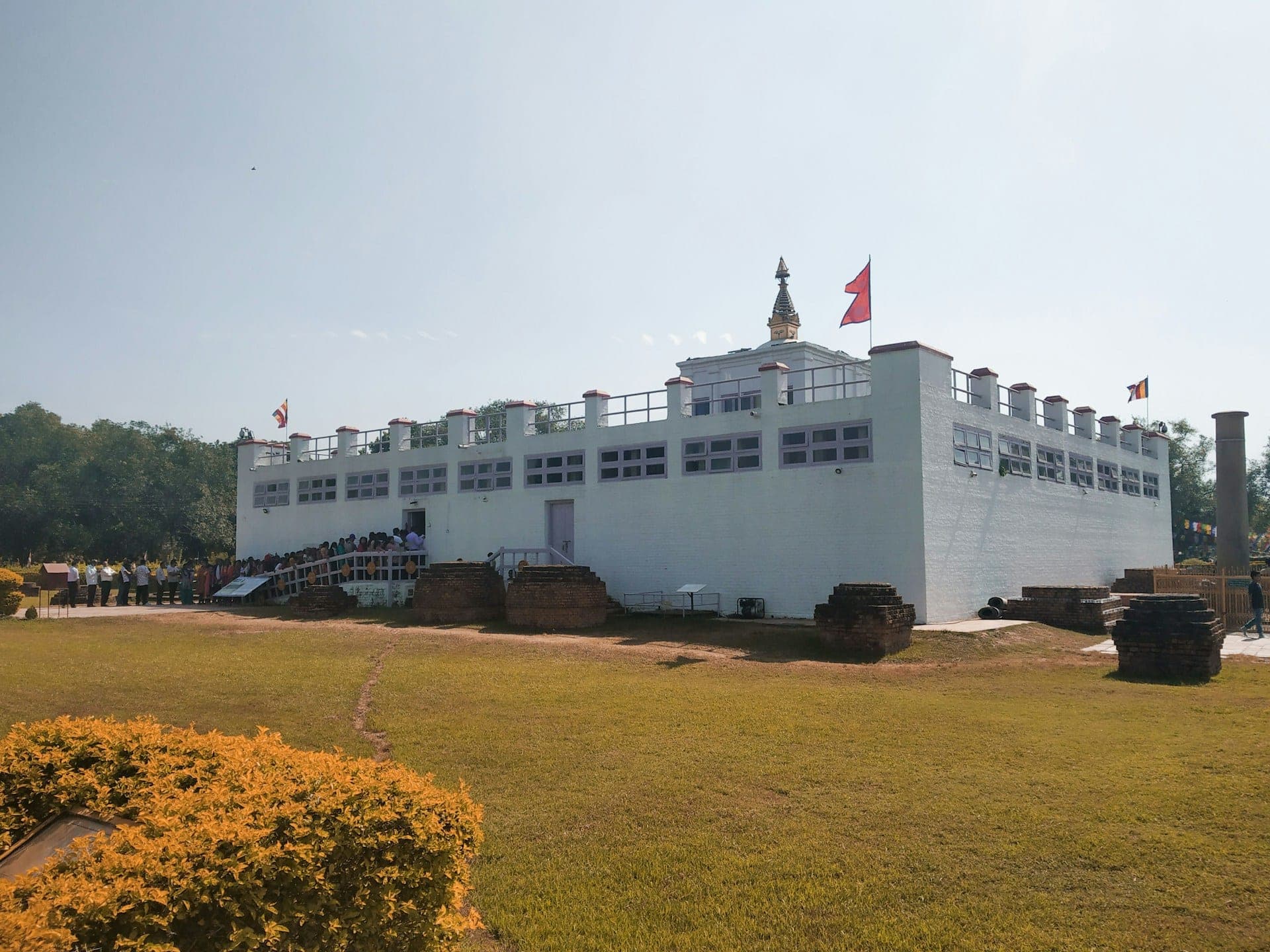
"Lumbini Sacred Garden & Maya Devi Temple"
Lumbini is one of the four principal holy sites of Buddhism. Recognized as the birthplace of Prince Siddhartha Gautama (Lord Buddha) in 623 BC, it holds immense spiritual significance for millions of devotees across the world.
The central UNESCO area includes the Maya Devi Temple, which shelters the exact marker stone of Buddha's birth, the Pushkarini Pond where Queen Maya Devi bathed, and the 3rd-century BC Ashoka Pillar.
How Lumbini Sacred Birthplace was built and used over time, what happens there during festivals, and what to know before you arrive.
Lost to dense forest over centuries, Lumbini was rediscovered in 1896 by General Khadga Shamsher and Dr. Alois Anton Führer, who unearthed the inscription of Emperor Ashoka confirming the site.
Celebrates the Birth, Enlightenment, and Parinirvana of Lord Buddha on the May full moon, bringing monks and international pilgrims together for silent prayer.
Shoes and leather items must be removed before entering the inner Maya Devi Temple walkway.
Lumbini Sacred Birthplace (Lumbini Sacred Garden & Maya Devi Temple) lies at 150 m in Lumbini Cultural Zone, RUPANDEHI DISTRICT, within the Lumbini Zone region. Its setting is described as UNESCO World Heritage Site, and the monument is associated with 623 BC (Birth of Siddhartha Gautama).
Most travellers reach Lumbini Sacred Birthplace from the nearest town in RUPANDEHI DISTRICT by road, then explore on foot. The recommended window is Autumn & Winter (Oct–March); early morning is quieter and cooler, while late afternoon offers softer light for the carved facades.
The monument represents Ancient Buddhist Pilgrimage Site, within the Universal Birthplace of Lord Buddha tradition. Brick, timber, stone, and metal are worked together in a way that has survived earthquakes and centuries of use, and restoration at Lumbini Sacred Birthplace continues to rely on local craftspeople.
Lumbini Sacred Birthplace is still a working religious and community space rather than a ruin. Offerings, repairs, festivals, and everyday traffic all take place among its historic structures, so visitors should expect the site to be busy with local life as well as tourism.