Lichhavi Artistic Triumph
Built during the reign of early Lichhavi rulers, Changu Narayan preserves the earliest surviving examples of classical Nepalese stone iconography and royal epigraphy.
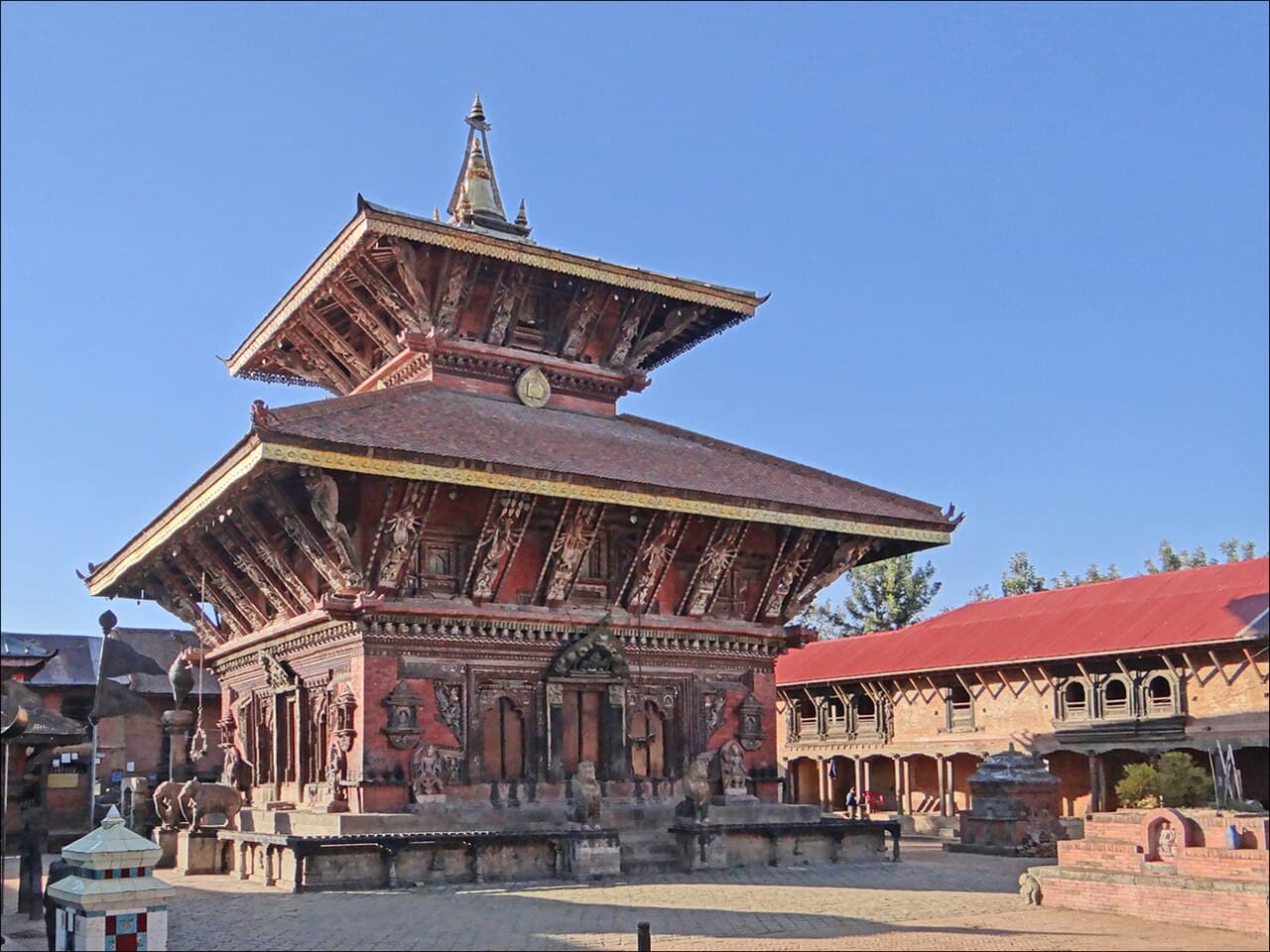
"Champakagiri Narayan"
Changu Narayan Temple rests on a high forested hill ridge east of Kathmandu. Dedicated to Lord Vishnu, it is widely considered the oldest standing temple structure and archaeological site in the Kathmandu Valley.
The courtyard contains a priceless collection of stone, wood, and metal sculptures spanning from the Lichhavi era, including the oldest written stone inscription in Nepal dated to 464 AD.
How Changu Narayan Temple was built and used over time, what happens there during festivals, and what to know before you arrive.
Built during the reign of early Lichhavi rulers, Changu Narayan preserves the earliest surviving examples of classical Nepalese stone iconography and royal epigraphy.
Thousands of pilgrims visit Changu Narayan to celebrate Lord Vishnu awakening from his four-month cosmic sleep.
A small local heritage ticket fee applies at the entrance village before ascending to the courtyard.
Changu Narayan Temple (Champakagiri Narayan) lies at 1,540 m in Changunarayan Ridge, Bhaktapur, BHAKTAPUR DISTRICT, within the Kathmandu Valley region. Its setting is described as UNESCO World Heritage Site, and the monument is associated with 4th–5th Century AD (King Hari Datta / Manadeva).
Most travellers reach Changu Narayan Temple from the nearest town in BHAKTAPUR DISTRICT by road, then explore on foot. The recommended window is Autumn & Spring (Oct–Dec / Feb–April); early morning is quieter and cooler, while late afternoon offers softer light for the carved facades.
The monument represents Ancient Lichhavi Pagoda Style, within the Vaishnavism Heritage Site tradition. Brick, timber, stone, and metal are worked together in a way that has survived earthquakes and centuries of use, and restoration at Changu Narayan Temple continues to rely on local craftspeople.
Changu Narayan Temple is still a working religious and community space rather than a ruin. Offerings, repairs, festivals, and everyday traffic all take place among its historic structures, so visitors should expect the site to be busy with local life as well as tourism.