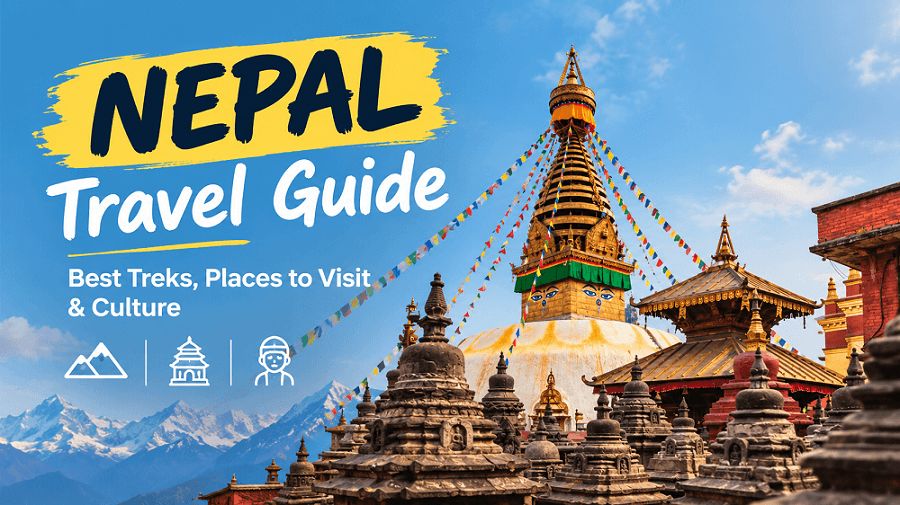
Nepal Travel Guide: Treks, Destinations & Himalayan Culture
Nepal is the kind of place that rearranges your idea of what a trip can be. Eight of the world's fourteen highest peaks sit here, Everest included, but the mountains are only part of it. There are ancient temples, quiet hill villages, lakeside towns, jungle lodges, and some of the warmest hospitality you'll find anywhere in South Asia.
Maybe you're dreaming of a Himalayan trek. Maybe you'd rather spend a lazy week in Pokhara, spot rhinos in Chitwan, or wander through old Newari towns. Whatever it is, this guide will help you sort out where to go and how to plan it.
Why Visit Nepal?
Nepal packs a lot into a small country. In a single trip you can go from steamy subtropical plains in the Terai to freezing high-altitude trails, and the food, architecture and way of life shift right along with the landscape.
A few reasons people keep coming back:
- Trekking that's famous for a reason. Everest Base Camp, the Annapurna Circuit and Langtang Valley are just the start.
- Mountain scenery. Snowy peaks, deep valleys, glacial lakes and alpine meadows.
- Deep history. Temples, monasteries, palaces and several UNESCO World Heritage Sites.
- Living culture. Festivals, regional food and communities that welcome visitors warmly.
- Wildlife. Rhinos, crocodiles, deer and plenty of birds in the national parks.
- Adventure. Rafting, paragliding, mountain biking, even bungee jumping.
- Something for every budget. Simple guesthouses and teahouses, boutique hotels, or luxury mountain lodges.
Best Places to Visit in Nepal
Whether you like busy cultural cities, quiet mountain settlements or jungle reserves, Nepal has a spot for you.
1. Kathmandu: The Cultural Heart of Nepal
Most international visitors start in Kathmandu, the capital. It's loud, crowded and fascinating, a city where centuries-old architecture sits beside modern cafés and bustling markets.
Begin at Kathmandu Durbar Square for a first look at traditional Newari architecture. Then head up to Swayambhunath, better known as the Monkey Temple, for sweeping views over the valley. Pashupatinath is one of South Asia's most important Hindu pilgrimage sites, and Boudhanath Stupa is the centre of Tibetan Buddhist life in the city. Leave time to get lost in the lanes of the old town, browse handicrafts and try the local food.
Don't miss:
- Swayambhunath and Boudhanath
- Kathmandu Durbar Square
- The atmosphere at Pashupatinath
- Markets and Newari cuisine
- Day trips around the valley (Kathmandu makes a handy base)
2. Pokhara: Lakes, Mountains and Adventure
Pokhara is where many travellers finally slow down. The town sits beside Phewa Lake with green hills all around, and on a clear day the Annapurna range fills the skyline.
You can paddle out on the lake, stroll the lakeside streets, visit Davis Falls and Gupteshwor Mahadev Cave, or get up early for sunrise at Sarangkot. Pokhara is also the main gateway to treks in the Annapurna region, and local operators run paragliding, ultralight flights, mountain biking and rafting trips if you want something more energetic.
Don't miss:
- A boat ride on Phewa Lake
- Sunrise from Sarangkot
- The International Mountain Museum
- Nearby villages and viewpoints
- The start of an Annapurna trek
3. Everest Region: Into the High Himalayas
Few mountain regions in the world have the pull of Everest. Tucked away in northeastern Nepal, it draws trekkers who want dramatic scenery and a chance to learn about Sherpa culture.
The Everest Base Camp trek winds through mountain villages, across suspension bridges, past Buddhist monasteries and through Sagarmatha National Park. Namche Bazaar is a key stop for most itineraries: it has mountain views, shops, lodges, and a good place to acclimatise. Kala Patthar is the classic viewpoint for Everest and the surrounding peaks.
This is serious high-altitude trekking, though. It's physically demanding, so plan enough time to adjust to the altitude and keep an eye on the weather.
Don't miss:
- Trekking towards Everest Base Camp
- Namche Bazaar
- Tengboche Monastery
- The view from Kala Patthar
- Sherpa traditions and mountain life
4. Annapurna Region: Varied Landscapes and Classic Treks
The Annapurna region is hard to beat for variety. You'll find everything from short hikes to long journeys over high passes, with traditional villages along the way.
The Annapurna Base Camp trek climbs through forests and terraced fields towards a huge natural amphitheatre ringed by peaks. The Annapurna Circuit is a different experience altogether, crossing several climate zones and the demanding Thorong La Pass. If you're short on time, the Ghorepani and Poon Hill route delivers beautiful mountain views without a huge commitment.
Trek lengths depend on your route, transport, fitness and the weather, so check current trail conditions and permit rules before you set off.
Don't miss:
- Annapurna Base Camp
- The Annapurna Circuit (with proper preparation and good conditions)
- Sunrise from Poon Hill
- Gurung and Magar villages
- The landscapes of Mustang
5. Chitwan National Park: Wildlife and Jungle
When you need a break from the mountains, head south to Chitwan National Park in the Terai. It's a mix of subtropical forest, grassland and river, and it's full of wildlife.
With an authorised guide you might see greater one-horned rhinos, deer, crocodiles and a long list of birds. Bengal tigers live here too, but don't count on spotting one. Depending on current park rules, you may be able to do jeep safaris, birdwatching, canoe trips and nature walks, and community-based visits are a nice way to learn about Tharu culture.
Pick operators who follow wildlife regulations and avoid anything that disturbs the animals.
Don't miss:
- A permitted wildlife safari
- Birdwatching in the park
- Tharu traditions and food
- A stay at a nature lodge near the park
- Timing your visit to the season that suits your plans
6. Lumbini: The Birthplace of Buddha
Lumbini, in Rupandehi District in the south, is where Siddhartha Gautama, the Buddha, was born. It's one of Buddhism's most important pilgrimage sites and a UNESCO World Heritage Site.
The Maya Devi Temple marks the sacred birthplace, and the monastic zone around it is dotted with monasteries and meditation centres built by Buddhist communities from many countries. It's a calm, contemplative place, ideal if you're drawn to Buddhism, spirituality or archaeology.
Don't miss:
- Maya Devi Temple
- The sacred garden
- The international monasteries
- Buddhist heritage sites
- A quiet few hours in the monastic zone
7. Bhaktapur and Patan: Newari Heritage
The Kathmandu Valley has several old towns where Newari art, architecture and craftsmanship are still part of everyday life.
Bhaktapur is known for its brick-paved squares, carved wooden windows, temples and pottery, plus juju dhau, a rich local yoghurt that's worth tasting. Patan, also called Lalitpur, is famous for its metalwork, courtyards and Patan Durbar Square. Both give you a look at Nepal's history beyond the mountains.
Don't miss:
- The historic Durbar Squares
- Wood and stone carvings
- Museums and artisan workshops
- Newari food
- Photos of old streets and courtyards (be respectful when people are in the frame)
Best Treks in Nepal
Trekking is the main reason many people come to Nepal, and there are routes for beginners, seasoned hikers and serious mountaineers.
| Trek | Typical duration | Difficulty | Best suited for |
| Everest Base Camp | 12–16 days | Challenging | Experienced hikers prepared for altitude |
| Annapurna Base Camp | 7–12 days | Moderate to challenging | Trekkers seeking mountain scenery |
| Annapurna Circuit | 12–18 days or more | Challenging | Trekkers seeking varied landscapes and high passes |
| Langtang Valley | 7–10 days | Moderate to challenging | Trekkers interested in Himalayan scenery and Tamang culture |
| Ghorepani–Poon Hill | 3–5 days | Moderate | Short holidays and first-time Himalayan trekkers |
| Mardi Himal | 4–7 days | Moderate to challenging | Trekkers seeking quieter trails and mountain viewpoints |
Treat these durations as rough planning estimates, not fixed itineraries. Your pace, acclimatisation, road access, weather and starting point can all change the total.
How to Choose the Right Trek
If it's your first Himalayan trek, think honestly about your fitness, how much time you have, your budget and how you handle altitude. Then match those to what you want from the trip:
- Short on time? Poon Hill is a great introduction to trekking in the Himalayas.
- Want the classic? Everest Base Camp is the iconic high-altitude journey.
- Love variety? The Annapurna Circuit moves through very different landscapes and mountain communities.
- Prefer something quieter? Langtang Valley has beautiful scenery and a chance to learn about Tamang culture.
- Want a short but adventurous trek? Mardi Himal is popular, though the altitude and trail conditions still call for preparation.
Before you commit, check the latest rules on permits, guide requirements, protected areas and restricted regions. They differ from route to route.
Understanding Himalayan Culture
Part of what makes Nepal special is how many different communities, languages and traditions share one small country. Hinduism and Buddhism shape the architecture, the festivals and daily life, and in many places they sit side by side, so temples, stupas, shrines and monasteries share the same streets.
Sherpa Culture in the Everest Region
Sherpa communities are closely tied to the Himalayan regions of northeastern Nepal. Their traditions, monasteries and deep knowledge of the mountains are central to life around Everest. You can learn more by visiting monasteries respectfully, staying at locally owned lodges, and chatting with people when they're happy to talk.
Newari Culture in the Kathmandu Valley
The Newar community has shaped the valley's art, architecture and food for centuries. Courtyards, pagoda-style temples, wood carvings, metal sculptures, festivals and elaborate feasts are all part of it. Bhaktapur and Patan are two of the best places to see it up close.
Gurung, Magar and Tamang Communities
Many hill and mountain villages are home to Gurung, Magar and Tamang communities, among others, each with their own languages, customs, music, architecture and food. On the trails you're most likely to meet them in the Annapurna and Langtang regions. Community-based tourism and locally owned lodges are good ways to learn about their traditions while supporting local livelihoods.
Festivals Worth Experiencing
Nepal celebrates something almost every month. Dashain and Tihar are the biggest, Holi brings colour to the streets, Buddha Jayanti honours the Buddha, and Indra Jatra is a major festival in Kathmandu.
Many dates follow the lunar calendar, so check them for the year you're travelling. Festivals can mean crowded public spaces, temporary closures, and changes to transport and accommodation, so plan with that in mind.
Nepali Food You Should Try
Food is a big part of any trip here. Menus vary by region, but you'll often see rice, lentils, vegetables, pickles, noodles, soups and dumplings.
A few things to look out for:
- Dal bhat: The everyday meal of rice, lentil soup, vegetables and accompaniments.
- Momo: Dumplings filled with vegetables, chicken, buffalo meat and more.
- Thukpa: A warming noodle soup, especially welcome in the mountains.
- Sel roti: A ring-shaped rice bread, often made during festivals.
- Newari cuisine: A rich tradition of regional dishes, snacks and ceremonial foods.
- Thakali meals: Rice, lentils, vegetables and pickles, served the Thakali way.
If you have dietary restrictions, tell people clearly, especially on remote trails where options can be limited.
Best Time to Visit Nepal
The right time depends on what you want to do: trek, sightsee, see wildlife or soak up the culture.
Spring: March to May
Spring is a popular season for trekking. It gets warmer, rhododendrons bloom across many hill regions, and a lot of trails are in good shape. Haze and cloud can cut into mountain views, particularly at lower elevations.
Autumn: September to November
Autumn is widely seen as the best time for Himalayan trekking. The monsoon has washed everything green and the mountain views are often crystal clear. It's also the busiest season, so book popular routes and accommodation early for peak dates.
Winter: December to February
Winter suits cultural sightseeing, lower-elevation hikes and some trekking routes. Up high, though, expect freezing temperatures, snow and tougher trails. Pick routes that fit the season and check local forecasts before you go.
Monsoon: June to August
Heavy rain hits much of Nepal. Landslides, muddy trails, leeches, flight disruptions and poor mountain visibility are all possible. Rain-shadow areas such as parts of Mustang can offer alternatives, but you'll still need to check access and conditions.
Nepal Travel Requirements: Visas, Permits and Entry
What you need depends on your nationality, why you're travelling, where you're going and the rules in force at the time.
Many foreign tourists can get a Nepal tourist visa on arrival, though eligibility and procedures vary, and some nationalities have different requirements. Confirm the latest rules with Nepal's official immigration authorities before you leave.
Trekking and protected-area visits may need permits too. Requirements differ by route, conservation area, national park and restricted region, and some places require a guide or an authorised agency.
Before you travel, check:
- Passport validity and entry requirements for your nationality
- Tourist visa eligibility, fees and application steps
- Trekking permits and protected-area entry requirements
- Special permits for restricted regions, if relevant
- Any rules for border crossings and onward travel
For reliable information, go to the Department of Immigration Nepal at https://www.immigration.gov.np/ and the Nepal Tourism Board at https://ntb.gov.np/. Don't rely only on old blog posts or social media for visa and permit details, because rules change.
Practical Travel Tips for Nepal
A bit of preparation goes a long way.
1. Give Yourself Time to Acclimatise
Altitude sickness can affect anyone, however fit. On high treks, climb gradually, build in rest days and learn the symptoms. If symptoms are severe or getting worse, get help and descend if needed. Never keep going up while you have symptoms.
2. Get the Right Travel Insurance
If you're trekking at altitude or doing adventure activities, make sure your policy explicitly covers them, including your maximum altitude. Helicopter evacuation, medical treatment and remote rescue often come with exclusions or conditions, so read the fine print.
3. Pack for the Weather
Mountain weather can turn quickly. Bring layers, waterproof outerwear, comfortable walking shoes or boots, sun protection and warm clothes for your route. High-altitude treks need more specialised gear than city sightseeing or lower-elevation walks.
4. Respect Local Customs
Dress modestly at religious sites, take off your shoes where required, and ask before photographing people or ceremonies. Follow the signs and instructions at temples and monasteries.
5. Carry Some Cash
Cards often won't work in smaller towns, local markets and remote trekking areas. Keep some local currency on hand, including small notes for everyday purchases and local transport.
6. Expect Transport Delays
Traffic, road conditions, construction, weather and landslides can all stretch a journey. Flights to mountain airports are sometimes delayed or cancelled. Leave extra time between important connections, and avoid booking an international departure right after a weather-dependent mountain flight.
7. Travel Responsibly
Cut down on single-use plastic, dispose of rubbish properly, respect wildlife and support locally owned businesses. On the trails, stick to established paths and use responsible guides and operators.
Suggested Nepal Itineraries
The best itinerary depends on your interests and how long you have. These are a starting point.
5 Days: Kathmandu and Pokhara
- Days 1–2: Explore Kathmandu's historic sites, temples and markets, and eat well.
- Days 3–4: Head to Pokhara, enjoy Phewa Lake and visit a few viewpoints.
- Day 5: Spend a last morning in Pokhara before moving on.
A good fit if you want culture and mountain scenery without a long trek.
7 Days: Kathmandu, Pokhara and Chitwan
- Days 1–2: Discover Kathmandu and the valley.
- Days 3–4: Explore Pokhara and the area around it.
- Days 5–6: Go to Chitwan for wildlife and nature.
- Day 7: Return towards Kathmandu or continue your journey, depending on your transport.
Travel times between these places can be long, so consider domestic flights or loosen the schedule so you're not rushing.
12–14 Days: Kathmandu and Everest Base Camp Trek
- Days 1–2: Arrive in Kathmandu and get organised.
- Days 3–4: Travel to the Everest region and start trekking, depending on flights and your route.
- Days 5–11: Walk through mountain villages, with proper acclimatisation and rest days.
- Days 12–14: Return from the trek and leave some slack for transport delays.
Think of this as a framework rather than a fixed plan. Some people need more time, and weather can disrupt flights and trekking schedules.
How Much Does a Nepal Trip Cost?
It depends on how you travel, when you go, how you get around, where you stay, which trek you pick and whether you need guides or permits.
Budget travellers can stay in hostels or guesthouses and use local transport. Mid-range travellers might choose private rooms, organised day trips and a mix of local and tourist-style restaurants. If you want luxury, major destinations have high-end hotels, private transfers and premium guided experiences.
Trekking costs work differently from a city holiday, since they can include guides, porters, lodging, meals, transport to the trailhead, gear and permits.
When you build your budget, think about:
- International and domestic transport
- Accommodation and daily meals
- Visa fees and permits
- Guides and porters, if you need or want them
- Travel insurance and an emergency fund
- Activities, gear rental and a cushion for surprises
Get current quotes before you leave instead of relying on one fixed number, especially for remote treks and peak season.
Frequently Asked Questions About Travelling to Nepal
Is Nepal suitable for first-time international travellers?
Yes. There's a well-established tourist infrastructure, lots of accommodation options, organised tours and trekking services. Just plan your transport carefully, check entry requirements and choose activities that suit your experience and fitness.
What is the best month to visit Nepal?
October and November are popular for trekking and mountain views, and March and April are lovely for spring scenery and trekking. The best month for you depends on where you're going, how high, and what you want to do.
Can beginners trek in Nepal?
Absolutely. Shorter routes like Ghorepani–Poon Hill work well for beginners who prepare properly and pick a suitable itinerary. Higher, tougher treks need more fitness, planning and acclimatisation.
Is a guide necessary for trekking in Nepal?
It depends on the route and the current regulations. Some areas require a guide or an authorised agency, while others don't. Check the rules for your exact trek before you go. Even where it isn't mandatory, a qualified guide can make the trek safer and richer, with better navigation and cultural insight.
Is Nepal only a destination for mountain trekking?
Not at all. You can also enjoy historic cities, pilgrimage sites, wildlife reserves, lakeside holidays, great food, traditional villages and adventure sports. Plenty of people have a wonderful trip without a single high-altitude trek.
Is Nepal expensive to visit?
It can suit most budgets. Local food and guesthouses keep daily costs low, while luxury hotels, private transport, specialised tours and high-altitude trekking push them up.
Do travellers need a visa for Nepal?
That depends on your nationality and circumstances. Many visitors can get a tourist visa on arrival, but check your eligibility and the current procedures on Nepal's official immigration website before you fly.
What should I pack for Nepal?
Pack for the season and your itinerary. City travellers mostly need comfortable clothes, walking shoes and sun protection. Trekkers should add layers, waterproof gear, sturdy footwear and specialised equipment for cold or high-altitude conditions.
Final Thoughts
Nepal is far more than the home of Everest. It's a place where Himalayan adventure, ancient heritage, diverse communities and genuine warmth all come together.
You might be trekking towards Everest Base Camp, wandering the Kathmandu Valley's cultural treasures, relaxing by the lake in Pokhara or looking for wildlife in Chitwan. Whichever it is, the best trips start with realistic planning. Choose places that match your interests, leave enough time for travel and acclimatisation, double-check the current visa and permit rules, and treat local communities and the environment with respect.
Ready to explore Nepal? Start planning your journey with Mighty Nepal, and get the destinations, trekking routes, cultural experiences and practical advice you need to make the most of your Himalayan adventure.