Nepal Wants Six More Mountains to Join the World’s 8,000-Metre Club
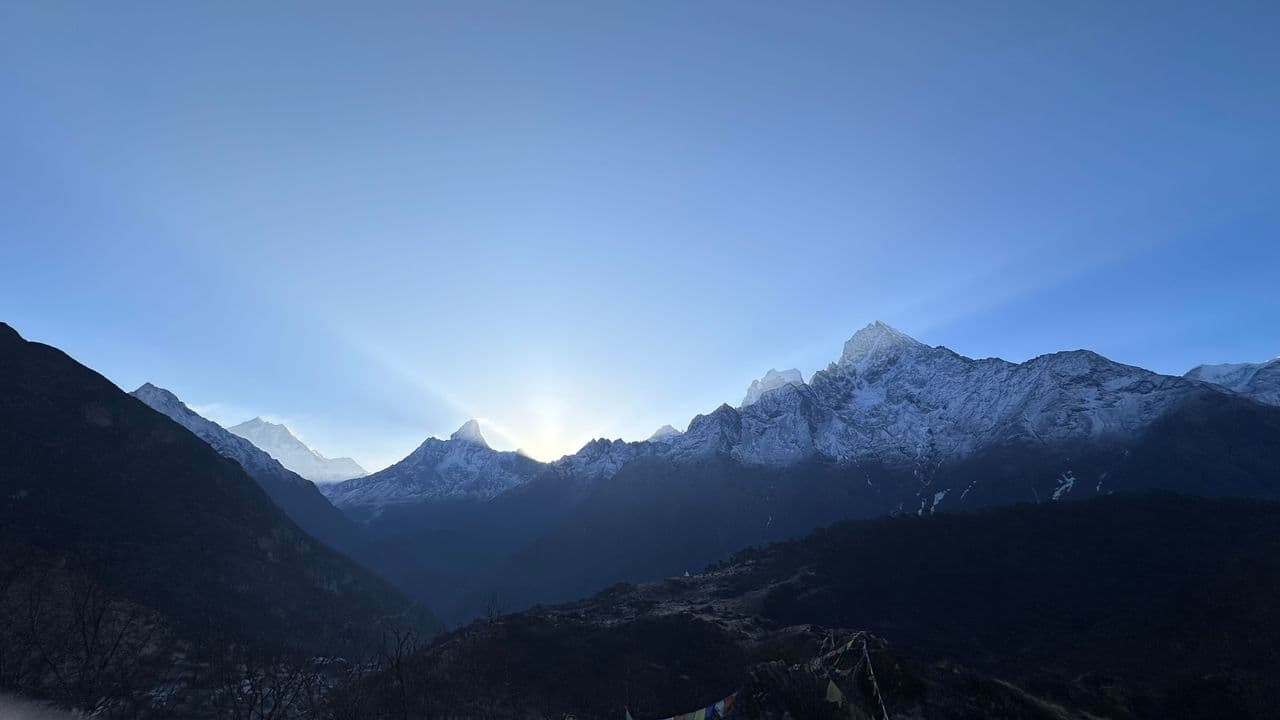
Nepal is known to have some of the tallest mountains on Earth, and the country wants the world to see six more of its Peaks as independent mountains above 8,000 metres.
If the proposal is accepted, the number of internationally recognised eight-thousanders in Nepal would increase from 8 to 14; therefore, the total number of recognised mountains above 8,000 metres worldwide will also increase from 14 to 20.
The proposal has brought fresh attention to Nepal’s mountain landscape, particularly the Kanchenjunga and Everest–Lhotse regions, but this is not about discovering six new mountains, as these peaks already exist. The question is about whether they should be officially counted as separate mountains rather than as subsidiary summits of larger peaks.
Which Six Mountains Does Nepal Want Recognised?
The six proposed peaks are associated with two of Nepal’s major Himalayan regions: the Kanchenjunga massif in eastern Nepal and the Everest–Lhotse region.
They are:
- Yalung Khang
- Kanchenjunga South
- Kanchenjunga Central
- Yalung Khang West
- Lhotse Middle
- Lhotse Shar
Mountaineers already know about these peaks, but their status as independent eight-thousanders is not recognized universally.
Their reported elevations range from just over 8,000 metres to more than 8,500 metres. However, elevation alone does not determine whether a summit qualifies as a separate mountain. Experts must also consider its geographical features, prominence and relationship to nearby summits.
Note: Peak names and reported elevations can vary between sources. The final technical classification should be checked against official documentation.
Why Does Nepal Want These Peaks Recognised?
For Nepal, this is about giving greater recognition to its Himalayan geography and mountaineering heritage.
The country already recongise 14 mountains above 8,000 metres in its national records. However, the international mountaineering community recognises only eight of them as separate eight-thousanders.
The Nepal Mountaineering Association wants the six additional summits to receive international recognition in their own right. Its position is that these peaks have distinct geographical characteristics and climbing routes that deserve separate consideration.
Think of it this way: two summits can belong to the same mountain massif without necessarily being the same climbing objective. Reaching one summit does not automatically mean that a climber has reached the other.
Nepal believes this distinction deserves greater international attention.
The proposal has also raised an interesting question for the mountaineering community: how should the world decide what counts as an independent mountain?
There is no simple answer based on height alone. The shape of the terrain, the depth of the connecting ridges and the prominence of a summit can all matter when experts assess a mountain's status.
Could Nepal Become Home to 14 of the World's 20 Eight-Thousanders?
Currently, 14 mountains are internationally recognised as eight-thousanders. Nepal has eight of them, including Mount Everest, Kanchenjunga, Lhotse and Makalu.
If all six proposed peaks receive international recognition, the worldwide total would increase to 20, with 14 located in Nepal or along its international borders.
That would put Nepal at the centre of the world's eight-thousander landscape, accounting for 70% of the total.
Nepal, whose identity and tourism industry are closely connected to the Himalayas, that would be a significant development.
It would also bring more attention to mountain regions that receive less international publicity than the Everest area, despite their extraordinary landscapes and challenging climbing objectives.
However, the proposed change would be a matter of classification, not the physical creation of new mountains. The peaks are already there; what could change is how the international community officially counts them.
What Does International Recognition Involve?
Nepal presented its proposal during the 2026 General Assembly of the International Climbing and Mountaineering Federation (UIAA), held in Kathmandu in late October.
The Nepal Mountaineering Association has put forward technical arguments supporting the independent status of the six summits. The proposal now depends on international assessment and acceptance.
The main challenge is, whether each summit meets the criteria for recognition as a separate mountain.
Experts may examine topographic prominence, the physical separation between summits, established geographical names and the characteristics of climbing routes.
This matters because a mountain's official status is not determined simply by whether its elevation exceeds 8,000 metres. Some high points are considered subsidiary summits of a larger mountain, while others are recognised as independent peaks.
International agreement would help ensure that the classification is accepted beyond Nepal's own mountaineering system.
Until that process is complete, the six summits should be described as proposed additional eight-thousanders rather than internationally recognised ones.
Could This Bring More Climbers to Nepal?
Nepal is already a major destination for mountaineers from around the world. Everest attracts the most attention, but the country's Himalayan ranges offer many other demanding expeditions.
Recognition of six additional eight-thousanders could give international climbers another reason to explore Nepal's mountain regions.
It could also help promote the Kanchenjunga area and lesser-known summits around the Everest–Lhotse massif. More international attention may create opportunities for expedition operators, mountain guides, porters, accommodation providers and local businesses.
Still, official recognition does not mean it will attract visitors or higher tourism income. Climbing mountains above 8,000 metres requires adequate experience, preparation, expertise in equipment and enough financial resources.
Any growth in mountaineering tourism would need to go parallel with safety, environmental protection and support for the communities living in these remote regions.
Protecting the Himalayas Is Just as Important
While Nepal is working recognition of its mountains internationally, the Himalayas face environmental challenges that cannot be ignored.
Rising temperatures, shrinking glaciers, and changing snow conditions are affecting mountain environments across the region. These changes can influence climbing routes, increase certain risks, and affect communities that depend on the mountains for their livelihoods.
Recognition might bring more attention to Nepal's Himalayan heritage, but taking environmental risk should also be in consideration.
The long-term value of these mountains goes beyond climbing records. They are part of a fragile natural environment, a source of livelihoods and an important part of Nepal's identity.
Responsible tourism and careful expedition management must remain essential as Nepal continues to promote its mountains internationally.
What Happens Next?
Nepal's proposal will lead to a major change in how the world's highest mountains are counted. If the six summits are accepted as independent eight-thousanders, Nepal's total would rise from eight to 14, while the worldwide total would increase from 14 to 20.
For now, the main question is whether the international mountaineering community will agree with Nepal's assessment.
Whatever the final decision, the proposal has brought attention to a Himalayan geography where not every important summit is as widely known as Everest, and the way mountains are classified can be more complicated than their height suggests.
For travellers and mountain enthusiasts, it is also a reminder that Nepal's Himalayas have much more to offer than the world's most famous peak.
Frequently Asked Questions
Which six peaks does Nepal want recognised as eight-thousanders?
The six proposed peaks are Yalung Khang, Kanchenjunga South, Kanchenjunga Central, Yalung Khang West, Lhotse Middle and Lhotse Shar.
How many eight-thousanders does Nepal currently have?
Nepal has eight internationally recognised eight-thousanders. Its national records list 14 mountains above 8,000 metres, including the six summits covered by the proposal.
How many mountains above 8,000 metres are there in the world?
There are currently 14 internationally recognised eight-thousanders. If all six proposed peaks are accepted, the total would rise to 20.
Does the proposal include Mount Everest?
No. Mount Everest is already internationally recognised as the world's highest mountain, at 8,848.86 metres. The proposal concerns six other summits in the Kanchenjunga and Everest–Lhotse regions.
Has Nepal's proposal been officially approved?
The proposal itself does not establish international recognition. The six summits should be considered proposed additional eight-thousanders until the relevant international assessment and decision are confirmed.
Why is this important for Nepal?
Recognition could strengthen Nepal's reputation as a mountaineering destination, draw more attention to its less-publicised Himalayan regions, and create opportunities for mountain tourism and research.
For Nepal, the effort is ultimately about ensuring that its remarkable Himalayan landscape receives the recognition it believes it deserves.