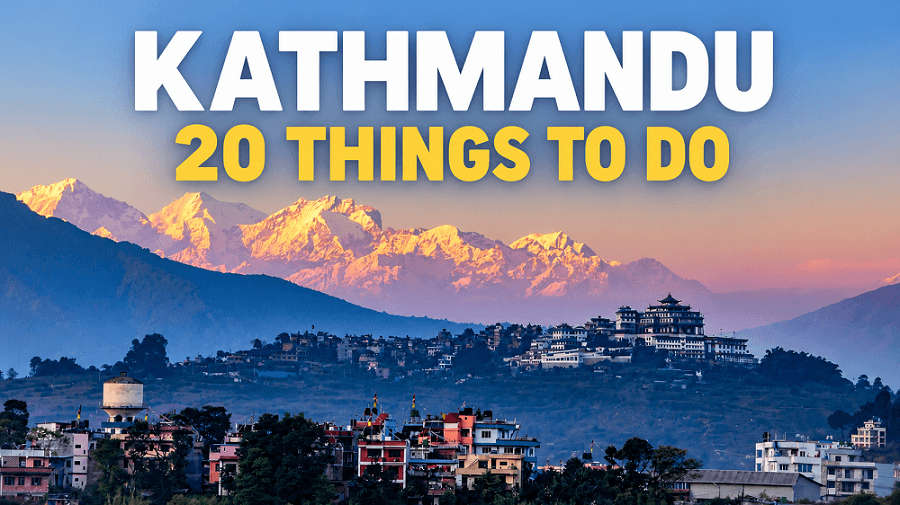
20 Best Things to Do in Kathmandu, Nepal
Kathmandu is loud, chaotic, and beautiful, often all within a single block. Temples sit between phone shops, monks walk past motorbikes, and the smell of incense mixes with frying momos. If it’s your first time in Nepal, the city can feel like a lot. It’s also one of the best introductions to the country you could ask for.
It’s a good base for onward trips to Pokhara, Chitwan, and Everest, but it deserves a few days of your time first. Here are 20 things worth doing, plus some practical advice at the end.
1. Climb up to Swayambhunath (the Monkey Temple)
This is probably the city’s most recognizable landmark. The white dome, gold spire, and painted eyes of the Buddha look out over the valley from a hilltop, and the view alone justifies the climb up the main staircase.
Yes, there are monkeys, which is how it got its nickname. Keep your snacks out of sight. Spin the prayer wheels as you go, and take a minute at the top to watch how local people use the place.
Tip: Go early. It’s cooler, quieter, and the light over the valley is lovely.
2. Circle Boudhanath Stupa
Boudhanath is one of the most important centers of Tibetan Buddhism outside Tibet. The huge white dome dominates the neighborhood, and the streets around it are lined with monasteries, Tibetan restaurants, handicraft shops, and stalls selling prayer flags.
Join the crowd of monks, pilgrims, and locals walking clockwise around the stupa. Then grab a rooftop café table and watch it all with a cup of tea.
Tip: Come in the late afternoon or evening, when the butter lamps are lit and the whole place glows.
3. Wander Kathmandu Durbar Square
This was the heart of royal life in the valley, and it still shows: carved wooden windows, tiered temples, courtyards, and the Hanuman Dhoka Palace. The Kumari Ghar is home to the “living goddess,” a young girl worshipped as a manifestation of divine energy.
Don’t stop at the main square. The lanes around it are full of craftspeople, small shops, and cafés, and that’s where the area feels most alive.
Tip: A local guide is worth it here. Much of the architecture is symbolic, and the stories behind it are half the fun.
4. Visit Pashupatinath Temple
Pashupatinath is one of the holiest Hindu temples dedicated to Shiva, and pilgrims come from across Nepal and India. It sits on the Bagmati River, with pagoda-style shrines, stone platforms, and ghats where funeral rites are carried out.
Only Hindus can enter the main temple, but you can explore much of the wider complex. Seeing it is moving and sometimes intense, with life, death, and faith all happening in the open.
Tip: Dress modestly, check the photography rules, and ask before photographing anyone. This is a place of active worship, not a backdrop.
5. Get lost in Thamel
Thamel is the tourist hub: trekking shops, souvenir stalls, bakeries, bars, travel agents, and hotels crammed into tight, noisy streets. It’s touristy, but it’s also fun, and a handy place to gear up if you’re heading to the mountains.
A few things worth doing here:
- Pick up handmade crafts and souvenirs
- Eat at a traditional Nepali restaurant
- Browse trekking gear and outdoor clothing
- Catch live music in the evening
- Duck into side streets, where you’ll find quieter courtyards and smaller shops
6. Take a day trip to Bhaktapur
Bhaktapur feels less like a tourist site and more like a town where people happen to live among medieval architecture. The Durbar Square has ornate temples, royal courtyards, and the 55-Window Palace. Nearby, Nyatapola Temple towers over Taumadhi Square, and potters still work in the old neighborhoods.
Try juju dhau, the creamy yogurt the town is known for, and shop for pottery while you’re there.
Tip: Give it at least half a day. A full day is better if you like getting lost in backstreets.
7. Explore Patan Durbar Square
Patan, also called Lalitpur, is known for its metalwork, stone carving, and Newari craftsmanship. Its Durbar Square is packed with temples and decorated palace buildings that show off generations of artisan skill.
The Patan Museum is excellent for context on the region’s religious art and architecture. After that, wander the nearby lanes, where workshops still turn out metal statues and ornaments.
Tip: Pair the square with a walk through the old town and lunch at a Newari restaurant.
8. Eat your way through Nepali food
You can’t really “do” Kathmandu without eating. Start with dal bhat, the classic plate of rice, lentil soup, vegetables, and sides. Then try momos, steamed or fried dumplings with veggie or meat fillings, and sample Newari cuisine, which has its own bold flavors.
Other things to look out for:
- Sel roti: a ring-shaped rice-flour bread, often made at festivals
- Chatamari: a rice-flour crepe sometimes called Newari pizza
- Bara: a savory lentil-batter pancake
- Yomari: a steamed rice-flour dumpling with a sweet filling
- Thukpa: a warming noodle soup from the Himalayan regions
Wash it down with Nepali milk tea, or butter tea if you’re feeling adventurous.
Tip: Ask locals where they eat, and pick busy places. High turnover means fresher food.
9. Take a break at the Garden of Dreams
Kathmandu can wear you out. The Garden of Dreams, just near Thamel, is a restored historic garden with pavilions, fountains, and lawns, and its European-style design is a nice contrast to the rest of the city.
It’s a good spot to read, have a coffee, or just sit for a while between sights. It suits couples, solo travelers, and photographers, or anyone who needs ten quiet minutes.
10. Browse the markets of Ason
Ason is one of the city’s old market neighborhoods, with narrow streets full of spices, vegetables, textiles, religious items, and household goods. Where Thamel caters to visitors, Ason is mostly about everyday shopping, which is exactly why it’s interesting.
Go in the morning, when it’s busiest. Keep an eye on your belongings and the traffic, and don’t block the narrow lanes when you stop to take photos.
Tip: You can walk from Ason to Durbar Square and cover a good chunk of the old city on foot.
11. Fly past the Himalayas
If you want mountain views without a multi-day trek, a sightseeing flight from Kathmandu is the easy way to do it. Depending on the airline, route, and weather, you may see major peaks, including Everest on some routes.
It’s a good option if you’re short on time or traveling with family. Just remember that views aren’t guaranteed. Clouds and schedule changes can get in the way.
Tip: Check the refund and cancellation policy before you book, and stick with an established airline.
12. Visit the Narayanhiti Palace Museum
This former royal residence became a museum after Nepal abolished its monarchy in 2008. You can walk through designated parts of the palace and learn about royal life, ceremonies, and the country’s political shift.
It’s a useful counterpoint to the older temples and palaces elsewhere in the city, since it covers much more recent history.
Tip: Confirm opening days, ticket details, and photography rules before you go.
13. Stop by the National Museum of Nepal
Near the western edge of the historic center, the National Museum covers the country’s history, art, and culture, with sculptures, weapons, and other historical objects.
It’s worth it if you’d rather understand what you’re looking at than just photograph it. After a visit, the temples and old buildings around the valley make a lot more sense.
Tip: Galleries sometimes close or change, so check what’s open on the day.
14. Head up to Kopan Monastery
Kopan sits on a hill north of central Kathmandu and is known for Tibetan Buddhist teaching, meditation programs, and calm surroundings. Depending on the schedule, visitors may be able to join public activities or organized programs.
The hilltop also gives you a different view of the valley, away from the noise.
Tip: Check visitor rules and program availability ahead of time. Dress modestly, keep your voice down, and respect areas reserved for residents and students.
15. Explore Kirtipur
Kirtipur is an old hill town southwest of central Kathmandu, with brick-paved lanes, traditional Newari houses, temples, and views over the valley. It’s a good place to try Newari food and see a quieter side of the region that doesn’t revolve around tourism.
It’s a nice choice if you’ve seen the main sights and want something more relaxed.
16. Ride the cable car to Chandragiri Hills
Chandragiri is a popular outing southwest of the city. A cable car takes you up to viewpoints, walking areas, and the Bhaleshwor Mahadev Temple, with views across the valley and, on clear days, the Himalayas.
It’s easy and fun for families, couples, and anyone who wants a mountain outing without a hard hike.
Tip: Pick a clear day for the best chance at distant peaks, and check the cable car status and weather before heading out.
17. Walk the streets around Indra Chowk
Indra Chowk and the lanes around it are part of Kathmandu’s traditional core, with historic temples, shops, and homes all mixed together. (It overlaps with Ason, so think of this as one long wander rather than two separate stops.)
Don’t rush. Look up at the carved buildings above the shopfronts, watch people leave offerings at small shrines, and see what the vendors are selling, from spices and sweets to prayer items and clothing.
Tip: Go during daylight, wear comfortable shoes, and carry some small rupee notes.
18. Catch a festival
Kathmandu is one of the best places in Nepal to see festivals. Dashain and Tihar are the big ones, and Indra Jatra is closely tied to the old city center. Streets fill with processions, music, and ceremonies, and there are plenty of Buddhist and Newari celebrations through the year.
Festival dates follow the lunar calendar, so check the dates for your travel year before planning around one.
Tip: Be respectful, follow local guidance, and ask before photographing ceremonies or people.
19. Join a cooking class or craft workshop
If you’d like to do more than look, a hands-on class is a good way to connect with the city. Some teach you to make momos or dal bhat. Others cover pottery, painting, or metalwork, often taught by people who learned the craft through family.
Look for a class that clearly states the instructor, duration, price, and what’s included.
20. Watch the sunset over the valley
After a day of temples and markets, end with a sunset. Good spots include Swayambhunath, Chandragiri Hills, or a rooftop café with a view. On a clear evening the hills appear in layers while the city lights flicker on below.
Arrive before the sun goes down, bring a light jacket in cooler months, and sort out your ride back if you’re heading outside the center. Haze can ruin the view, so treat a clear panorama as a bonus.
When to go
You can visit year-round, but the seasons feel quite different:
- Spring (March to May): Pleasant for sightseeing and hill trips, though haze can hide distant mountains.
- Autumn (September to November): The most popular season, with good conditions for exploring and starting treks.
- Winter (December to February): Chilly mornings and evenings, but plenty of good sightseeing days. Pack warm layers.
- Monsoon (June to August): Rain, humidity, and cloud, which can limit mountain views, though the valley is still worth visiting.
For a first trip, spring or autumn is usually the safest bet.
How many days do you need?
- One day: Durbar Square, Swayambhunath, and Thamel.
- Two days: Add Boudhanath, Pashupatinath, and plenty of food.
- Three days: Add Patan, Bhaktapur, and something slower, like the Garden of Dreams or a cooking class.
- Four to five days: Slow down. Visit Kirtipur or Kopan, ride up Chandragiri, and poke around neighborhoods beyond the tourist zone.
If you’re trekking afterward, leave some buffer for travel logistics and weather delays.
Practical tips
Getting around. Taxis, ride-hailing apps where available, and local transport all work. Walking is best in the compact old neighborhoods, though traffic and uneven pavement can make it tiring. Plan transport ahead for day trips to Patan, Bhaktapur, or Chandragiri.
Money. Nepal uses the rupee (NPR). Carry cash for markets, small restaurants, entry fees, and transport. Bigger hotels and established businesses may take cards, but it varies.
Etiquette. Dress modestly at religious sites, remove your shoes where asked, follow photography signs, and don’t touch sacred objects without permission. Walk clockwise around Buddhist stupas.
Health and safety. Watch your valuables in crowded markets, use reputable transport, and be careful crossing busy roads. Drink safe water and be thoughtful with street food. Air quality can be poor, especially in dry periods, so check conditions if you’re sensitive.
Staying connected. A local SIM or eSIM helps with maps and transport. Download offline maps before wandering the old neighborhoods, where the narrow streets are easy to get turned around in.
A simple 3-day itinerary
Day 1: Old Kathmandu
- Morning: Durbar Square and the nearby lanes
- Afternoon: Ason and Indra Chowk
- Evening: Dinner and a stroll through Thamel
Day 2: Spiritual Kathmandu
- Morning: Boudhanath
- Afternoon: Pashupatinath
- Evening: Wander the area or relax at a rooftop café
Day 3: Beyond the city
- Morning: Patan Durbar Square and Patan Museum
- Afternoon: Bhaktapur, if you have the time and energy (or give Bhaktapur its own day for a slower pace)
- Evening: A final Nepali meal back in Kathmandu
Final thoughts
Kathmandu is more than a stopover on the way to the mountains. It’s a place you can spend days exploring, and one that blends Hindu and Buddhist traditions, centuries-old architecture, and everyday life in a way that’s hard to find anywhere else.
Whether you end up in a Durbar Square courtyard, circling Boudhanath, or eating momos in Thamel, the best advice is to leave some gaps in your plan. Stop for tea, wander a market with no goal, and let a few things happen by chance. Those tend to be the moments you remember.